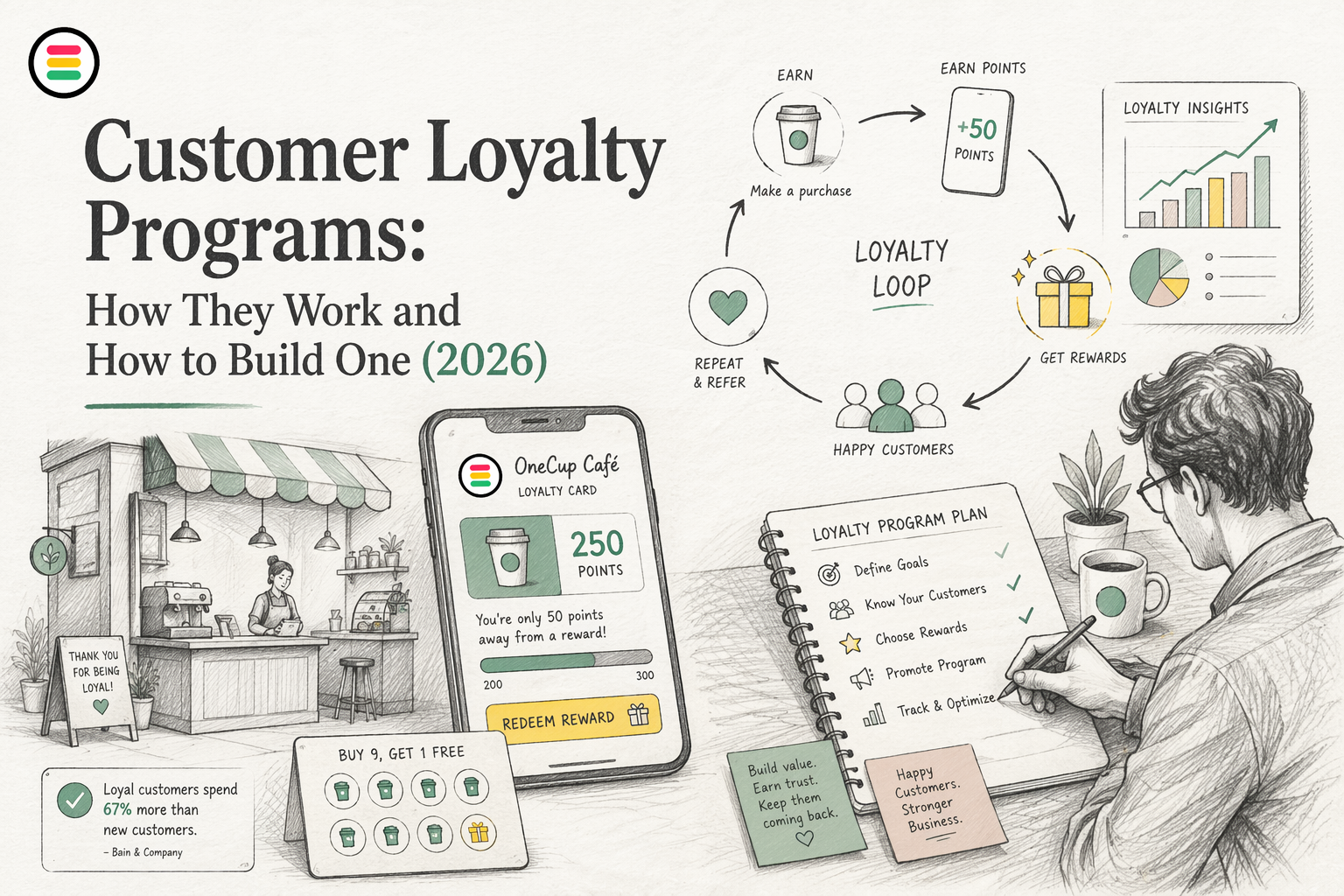
Quick Summary: Customer loyalty programs reward repeat business by offering simple, valuable incentives like points, stamps, or cashback. They work best when easy to join, understand, and redeem, especially with fast, clear rules. In 2026, the most effective programs are quick to build trust, accessible across channels, and leverage wallet-native tech like OneCup.
A coffee shop, salon, or restaurant group can lose repeat visits for one simple reason: people forget to come back. A customer loyalty program fixes that by giving customers a reason to return and making each sale the start of a longer relationship.
This guide tackles the real issue behind weak repeat business: many owners launch offers, but not a clear customer loyalty program. You will learn how customer loyalty programs work, which types of customer loyalty programs fit different local businesses, and what strong loyalty program examples have in common.
We will also cover how to build a modern loyalty program, including wallet-native options like OneCup. If you want stronger customer loyalty, smarter retention, and better customer loyalty programs, this guide gives you the playbook.
In short, a customer loyalty program is a simple system that gives people a reason to come back. Customers earn value for repeat visits, repeat orders, referrals, or higher spend. That value might be points, stamps, perks, cashback, or member-only access. The goal is simple: reward repeat behavior and make your business the easy next choice.
Loyalty programs work because they change the math and the feeling of a purchase. Customers see a clear benefit in staying with you instead of trying a competitor. Deloitte’s 2025 survey found 72% of consumers say loyalty programs make them more likely to spend with their preferred brand, and 56% say they increase spending because of the program according to Deloitte.
They also help people build habits. A free coffee after ten visits, a birthday perk, or faster rewards can push a casual buyer into a regular.
The best programs feel easy, fair, and worth it. If rewards are hard to earn or redeem, people stop caring.
What do businesses get besides repeat purchases? More customer data, better targeting, stronger brand recall, and a clearer reason for customers to pick you over similar options. EY found 92% of surveyed consumers belong to at least one loyalty program in its 2025 market study, so your program also helps you stay competitive.
Also Read: Loyalty Reward Cards: How They Work and Why Your Business Needs One
Most loyalty programs fit into five simple models. The best one depends on how often people buy, what your margins look like, and whether you want to drive spend, visits, or word of mouth.
Customers earn points for each purchase, then trade those points for rewards. This is still the most common setup because it is easy to explain and works well for repeat visits. Talon.One’s 2026 guide lists points as one of the main loyalty structures, especially for retail and food-led brands.
Customers collect a set number of visits or purchases to get a free item or perk. This model works best for coffee shops, quick service, car washes, and beauty services. It is simple, low effort, and easy to understand at a glance.
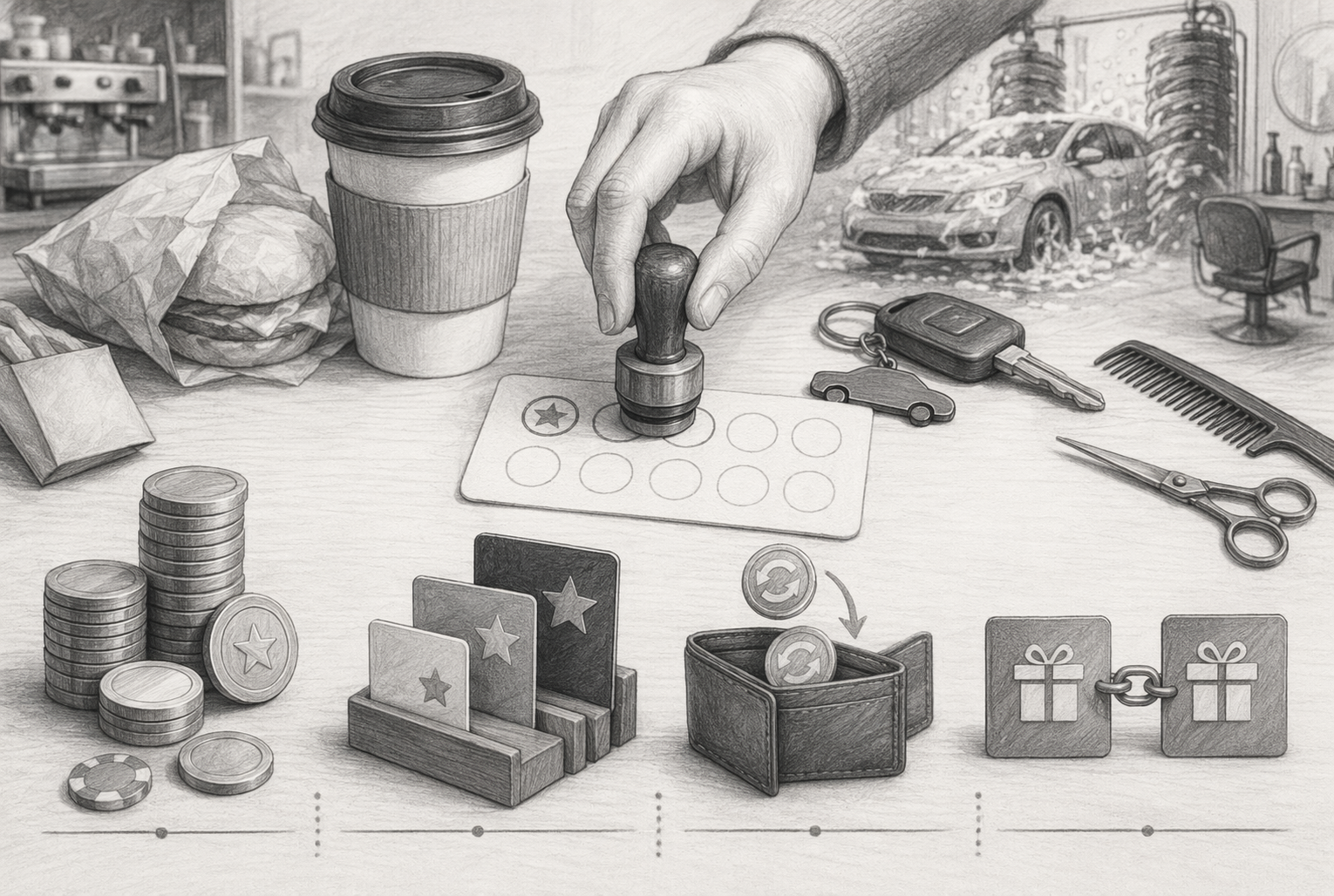
Customers move up levels like Silver, Gold, or VIP based on spend or visits. Each level unlocks better rewards.
Tiered programs work well when your top customers spend much more than average. They also create status, which can push customers to consolidate more purchases with you.
Tiered programs fail when the jump between levels feels too hard or the perks feel too small.
Customers get a fixed value back, usually as cash, account credit, or store credit. This model is clear and easy to trust. Antavo’s 2026 loyalty research notes that transactional benefits still play a major role in loyalty design, even as brands add more experience-led rewards in its 2026 report.
Customers earn a reward when they bring in a friend who buys. This type helps you do two jobs at once:
For many local brands, referrals work best as an add-on, not a full program. A wallet-native platform like OneCup can pair referrals with simple ongoing rewards without making the program feel heavy.
Loyalty programs run on a simple loop: join, identify, earn, redeem, repeat. The hard part is keeping the rules clear, because the CFPB warns that vague conditions, reward devaluation, and failed redemptions can break trust fast in rewards programs CFPB circular.
Enrollment and identification
Customers join at checkout, through a QR code, by text, or from a wallet pass. Then your staff needs a fast way to recognize them, like a phone number, barcode, or tap-ready pass. The smoother this step feels, the more repeat visits you capture.
Earning rules and reward logic
Most programs reward one clear action:
Set one main rule first. Example: earn 1 point per $1, or 1 stamp per visit. Add bonus logic only if staff can explain it in one sentence.

Redemption and reminders
Rewards should feel easy to use, not hidden behind fine print. The CFPB has flagged redemption problems and rewards that vanish without clear notice issue spotlight. Use simple triggers:
If customers need staff help every time they redeem, your setup is too hard.
Tracking performance
Watch four numbers:
These tell you if the program is growing, being used, and driving return trips. Platforms like OneCup help by tying wallet-based identification to cleaner tracking across locations.
Pick one clear job for the program. Do not start with rewards first. Start with the behavior you want to change, like more repeat visits in 30 days, higher average spend, or more visits across locations.
Open Loyalty’s 2026 benchmark notes that retention, lifetime value, revenue, and purchase frequency are the top ways teams measure success.
Match the model to how people buy from you:
Keep the rules simple. If staff cannot explain it in 10 seconds, customers will not use it.

Give rewards people want soon, not someday. Antavo’s 2026 report says top customer complaints are rewards that take too long to earn, expire too fast, or feel unattractive in its global loyalty report.
Good reward options include:
A small, easy win usually beats a big reward that feels far away.
Choose tech that fits your team, not just your wishlist. You need four basics:
For local and multi-location operators, wallet-native tools can reduce app friction. OneCup is a good fit if you want app-free digital loyalty with simple rollout across stores. Compare setup time, POS fit, reporting, and how fast customers can join.
Making the program too complicated
If customers need a cheat sheet, the program is broken. Long rules, confusing point values, and hard redemption steps create friction. Programs work better when earning and rewards feel obvious, fast, and easy to track.
Offering rewards that do not feel valuable
Customers stop caring when rewards feel cheap, far away, or irrelevant. That gap is real - a 2026 loyalty study found many brands overestimate how valued members feel, according to Brandmovers’ report. Give rewards people actually want, and let them reach the first one quickly.
Failing to measure the right metrics
Signups alone can fool you. You need to track active member rate, redemption rate, repeat visits, and revenue lift. Open Loyalty’s 2026 metrics guide stresses measuring real engagement, not just enrollment.
A simple program with clear value beats a big program nobody uses.
Customer loyalty programs in 2026 win on speed, simplicity, and trust. Customers still want rewards, but they expect them to feel easy, relevant, and available across in-store, online, and mobile touchpoints.
According to Fast Company’s 2026 loyalty analysis, 90% of consumers expect rewards to build quickly and 87% want programs to be simple. That lines up with LoyaltyLion’s 2026 research, which found 85% say in-store loyalty access matters.
For small and multi-location businesses, that means:
In 2026, the best loyalty programs feel easy to join, easy to use, and easy to redeem.
That is why wallet-native options, including platforms like OneCup, are gaining attention.
Ready to launch a loyalty program without app friction? OneCup helps you run wallet-native, customizable rewards that are easy to join, track, and scale across locations. Start simple, test fast, and keep more customers coming back.
A customer loyalty program gives people a reason to come back. It rewards repeat visits or spend with points, stamps, perks, cashback, or member-only offers that increase retention and average order value.
Customers join, complete actions, and earn rewards based on clear rules. Good programs keep signup simple, track visits or spend well, and offer rewards people actually want to redeem soon.
Common types include points, digital stamp cards, tiers, cashback, and referral programs. Local businesses often start with stamps or points, then add tiers or referrals as customer data grows.
Start with one goal, like more repeat visits. Pick a simple reward model, set earning rules, train staff, promote signup at checkout, and track redemption, repeat rate, and profit monthly.
In summary, customer loyalty programs work when they make repeat visits feel easy, useful, and worth it. The main lesson is simple: pick a model your customers understand, reward behavior that matters, and keep setup, earning, and redemption friction low.
In 2026, speed, simplicity, and trust matter most. Fast Company reports that 90% of consumers expect rewards to build quickly and 87% want programs that are easy to use. For local and multi-location brands, modern options like wallet-native programs such as OneCup can help you stay simple while keeping loyalty visible and convenient.
OneCup LLC
651 N BROAD ST - SUITE 201
MIDDLETOWN DE 19709
United States
Whatsapp : +18023003737

.svg)

.svg)