
Quick Summary: Digital loyalty program costs in 2026 include not just monthly fees but also setup, rewards, staff time, and integrations. Pricing models vary from flat monthly rates to per-location or usage-based fees, with costs rising as businesses grow. Hidden expenses like messaging, hardware, and support can significantly impact the budget. Comparing total ownership costs and aligning pricing models with business size and needs helps maximize ROI and avoid unexpected expenses.
A café, salon, or retail chain looking at Digital Loyalty in 2026 often sees three choices: free, $49 per month, or a custom quote. The hard part is that the Loyalty Program Price rarely shows the full bill. Real Loyalty Program Costs can include setup, SMS, POS links, support, staff training, and extra locations.
This guide clears that up. It breaks down Loyalty Program Pricing, hidden Digital Loyalty Costs, Reward Program Costs, and wider Loyalty System Costs so you can compare vendors fairly. It also shows how Digital Loyalty Solutions price by contacts, visits, stores, or features, and how Reward Program Pricing changes as you grow.
You are not just buying software. You are buying a Loyalty Program that has to work in real stores. This guide uses a practical, cross-industry view of Digital Loyalty, Loyalty Program Costs, and total Loyalty Program ownership.
Most Loyalty Program Costs start with the monthly platform fee. That usually covers the core engine: customer profiles, points or stamp tracking, reward rules, basic reporting, and often one or two integrations. A digital-first setup also reflects the wider shift toward app and wallet-based programs, as noted in Wikipedia’s loyalty program overview.
What changes the price fast:
The cheapest plan is not always the lowest-cost option if it creates manual work.

This is the part many owners miss. Every free coffee, discount, gift, or cashback offer comes out of your margin. If you run points, those points can also become a liability until customers redeem or they expire. Yotpo notes that reward value is often the biggest variable in total program spend in its loyalty cost calculation guide.
Your real reward cost depends on:
A free item usually costs you its cost to serve, not full retail price. That is a key part of smart Loyalty Program Costs planning.
You also pay for the work around the software:
Some brands like OneCup help reduce this overhead with simpler, app-free flows. That matters because lower admin time often protects profit better than shaving a few dollars off the subscription.
Buyers usually see four pricing setups. The model matters as much as the sticker price, because it changes how fast your cost grows.
This is the easiest model to budget. You pay one set fee each month for a fixed feature tier. Many small business platforms still use this setup, and public 2026 guides place basic plans from free up to about $300 monthly, with many SMB tools clustered far lower according to FaveCard’s 2026 pricing guide.
This looks simple until you add stores. A vendor may quote one price, but that fee applies to each site. A $45 plan becomes $135 for three locations. This model is common with POS-linked tools and can work if each branch runs on the same stack and earns enough repeat sales to cover its own cost.
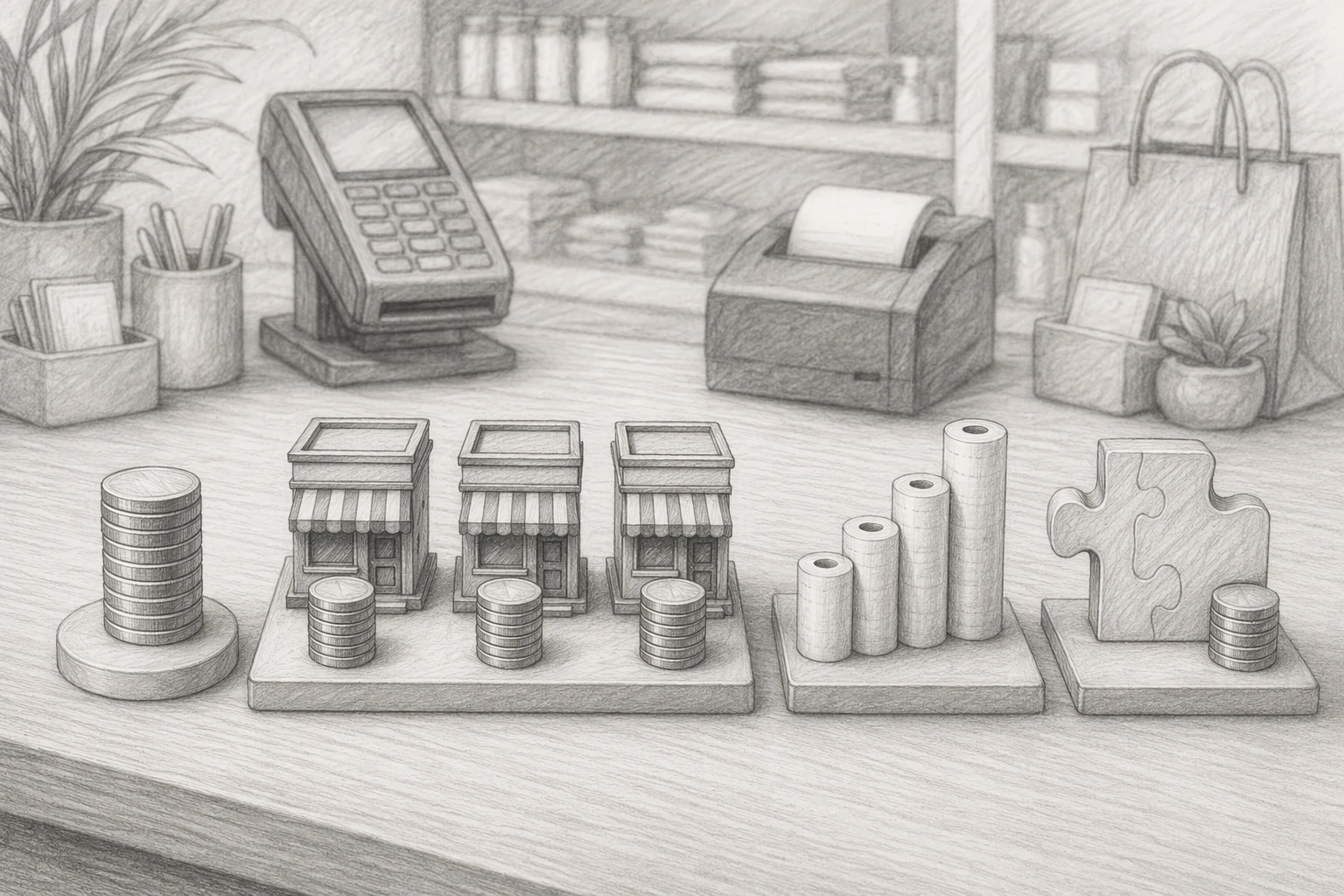
Some platforms charge based on activity, not just access. That can mean per location plus a fee for transactions, scans, messages, or active members. It sounds fair, but busy operators can outgrow it fast. Wikipedia’s loyalty program overview also notes subscription-based and fee-based reward structures, which helps explain why pricing now varies so widely.
Check for SMS fees, scan fees, and customer caps before you compare plans.
Larger chains often get custom quotes instead of public pricing. These deals may bundle setup, API work, reporting, training, and account support. Ask for a line-by-line breakdown.
| Business type | Typical monthly software spend | Common extra costs | Best-fit pricing style |
|---|---|---|---|
| Small local businesses | $30-$150 per location | Setup, SMS, reward discounts | Flat monthly plan |
| Retailers and multi-location brands | $150-$600 per location or custom | Integrations, training, data sync | Tiered or location-based |
| Hospitality and experience-based venues | $59-$400 per location | Campaign tools, reward funding, POS links | Bundled retention plan |
| Enterprise programs | $2,000-$15,000+ monthly total | Onboarding, APIs, support tiers, contracts | Custom annual contract |
Most single-location shops land in the $30-$150 per month range. That usually covers a basic digital stamp card or points program with simple reporting. Setup is often $0-$500, especially if you use a lightweight platform. Some 2026 market guides place small-business loyalty tools in this same band, with low-cost plans aimed at cafes, salons, and local retail according to Loyal N Save.
Low software cost does not mean low total cost. Reward discounts and staff time can cost more than the platform.
Brands with several stores usually move into $150-$600 per location, though some vendors switch to custom quotes after 10 locations. Costs rise fast when you need shared customer data, location-level reporting, and POS integrations.
Restaurants, bars, family venues, and similar businesses often pay $59-$400 per month for practical tools. Costs climb if loyalty is bundled with email, gift cards, or marketing. One 2026 review notes Toast bundles loyalty into a broader package at $185 per month, while Square Loyalty starts at $45 per month but stays tied to Square POS as summarized in this 2026 pricing review.
Enterprise pricing starts to make sense when you need:
At that point, $2,000-$15,000+ per month can be normal. If your brand is still testing basic repeat-visit offers, that level is usually too much.
Software price is only the start. The budget usually shifts when usage, setup work, and staff time hit the invoice.
Text and push costs can rise fast. SMS stays popular because it works on almost every phone and does not need an app or data plan for the customer, according to Wikipedia's SMS overview. For the business, though, each campaign can add message fees, carrier pass-through fees, and charges for replies or failed sends.
Small list today, big bill later. Usage-based pricing often looks cheap until your active member base grows.

You may also pay to connect your loyalty tool to POS, e-commerce, CRM, or gift card systems. If your old data is messy, migration work can cost more than the first month of software. Some vendors charge for API access, custom fields, or test environments.
Long contracts can lock in fees you did not expect. In the U.S., A2P 10DLC business texting may also require one-time registration, vetting, monthly campaign fees, and carrier fees, as shown in HighLevel's 2026 fee breakdown.
| Hidden cost area | What triggers it | Why it matters |
|---|---|---|
| Training | New staff, multi-site rollout | Slows adoption |
| Admin time | Offer changes, support tickets | Adds labor cost |
| Contract terms | Minimums, renewals, exit fees | Reduces flexibility |
The monthly fee is only the first line item. Your real cost includes setup, staff time, reward funding, support, training, and any extra charge for SMS, locations, or integrations. Some platforms look cheap until your member count grows.
Use a simple checklist before you compare vendors:
| Cost area | What to check | ROI risk |
|---|---|---|
| Software | Flat fee or usage-based pricing | Bills rise as volume grows |
| Setup | One-time launch or data import fees | Slower payback |
| Operations | Staff time, support, training | Hidden ongoing spend |
A low sticker price can still be the most expensive option over 12 months.
Pricing should fit how your business sells. A cafe with fast repeat visits may do well with simple flat pricing. A multi-location retail group may need stronger controls, reporting, and location rules. If you pay for features you will not use, ROI drops fast.
Pick the model that matches your shape:
Bain found rewards can deliver strong returns, but results vary by category and design, so fit matters more than hype Bain’s 2026 loyalty research.
Run the numbers before you sign. Start with expected member growth, repeat visit lift, average order value, and gross margin. Then subtract total program cost. Bond reports 73% of consumers spend more with brands because of loyalty programs, but your model still needs a conservative case Bond’s 2026 report.
Use this basic flow:
If break-even only works in a best-case forecast, keep shopping.
Small businesses often pay a monthly platform fee, setup cost, and optional SMS or wallet pass charges. Total costs can range from low monthly plans to custom enterprise pricing, depending on locations, users, and support.
Retail, restaurants, beauty, and multi-location brands buy differently. Some pay per store, some per active customer, and some by message volume. High-frequency businesses usually care more about redemption costs and repeat visit tracking.
Main cost drivers include country coverage, local data rules, payment needs, language support, POS links, onboarding, and support hours. Multi-location brands also pay more for role controls, reporting, and central program management.
Most plans include member profiles, rewards rules, campaign tools, dashboards, and basic support. Higher tiers add segmentation, automation, POS integrations, API access, fraud controls, and deeper analytics for lifetime value and retention.
Start with one clear reward model, track repeat visits, and cut unused features. Compare total ownership cost, not just software price. Lower-friction tools like OneCup can reduce rollout and training costs for lean teams.
Match pricing to local buying power, tax rules, and message costs. Keep rewards simple, test market by market, and budget for compliance. A model that works in one country may lose margin in another.
OneCup often fits businesses that want app-free loyalty with less setup friction. Compared with heavier platforms like Openloyalty or FiveStars, it can be easier to launch, especially for teams that want simpler operations.
Watch for SMS fees, wallet pass limits, integration work, data hosting needs, support outside local hours, and contract minimums. Currency changes, taxes, and region-specific privacy work can quietly raise the real annual cost.
Digital loyalty program pricing in 2026 is not just the monthly software fee. Your real cost includes rewards, staff time, setup, promos, integrations, and payment fees. For many businesses, card processing alone can take 1.5% to 3.5% of each sale, according to NerdWallet's 2026 fee guide. The smart way to compare vendors is simple:
The cheapest platform can become the most expensive if it adds manual work or weak retention.
Good pricing decisions come from total ownership cost, not headline plan price.
OneCup LLC
651 N BROAD ST - SUITE 201
MIDDLETOWN DE 19709
United States
Whatsapp : +18023003737

.svg)

.svg)
