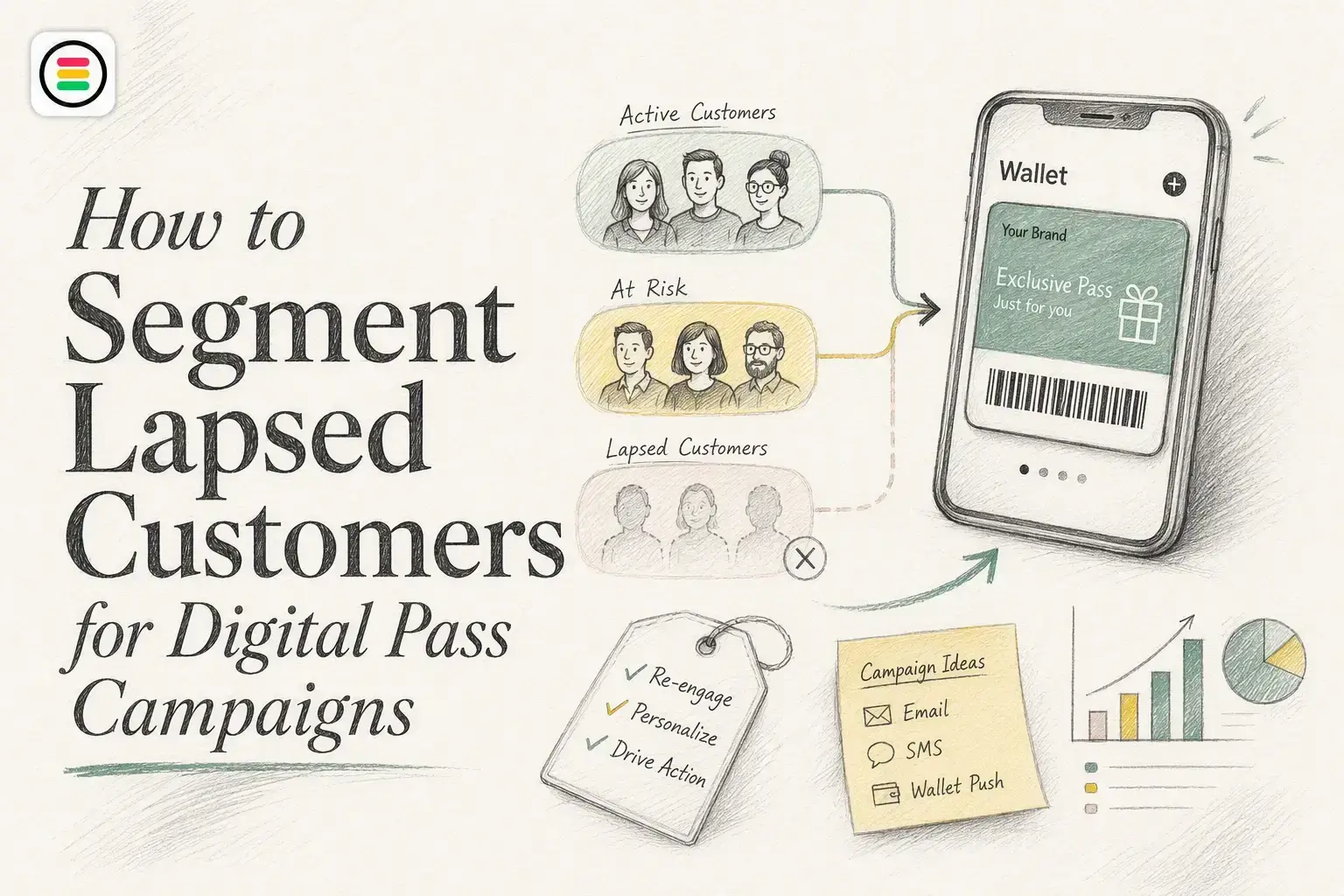
Quick Summary: Segment lapsed customers based on their purchase rhythm, not fixed timeframes, to craft targeted re-engagement messages. Use recency, spend, and reward proximity to create four distinct groups, each needing different offers. Focus on signals like last visit date and reward progress that wallet passes can trigger, avoiding weak data points. Personalizing messages based on these segments improves reactivation chances and keeps customers engaged.
A coffee shop with a wallet pass and a 45-day silent regular should not send a bland win-back blast. It needs Customer Segmentation. One Lapsed Customer may be one stamp from a reward, another may be fully drifting, and another may just be off their usual visit cycle. This guide shows Customer Segmentation for wallet passes using recency, spend, and reward distance. It focuses on Lapsed Customers Digital teams can act on fast, with Customer Segmentation built for real operators.
Use your natural repeat cycle as the baseline
A fixed rule like "lapsed after 90 days" is too blunt. Start with your real repeat cycle instead. Cohort tracking groups buyers by shared timing and shows how repeat behavior changes over time, which makes it better than one blended average, according to Shopify’s cohort retention guide. If most customers return every 21 days, 45 days may be lapsed. If they return every 90 days, 45 is still normal.
A wallet pass works better when the message matches the customer’s normal buying rhythm.
Separate ‘quiet’ from ‘gone’
Not every inactive customer is lost. Adobe recommends setting churn when repeat probability drops to a threshold where retention should switch to reactivation, not at one fixed date for everyone, in its repeat probability decay guidance.
Use simple bands:
Also Read: Wallet Passes vs. Standalone Loyalty Apps: Which Is Better?
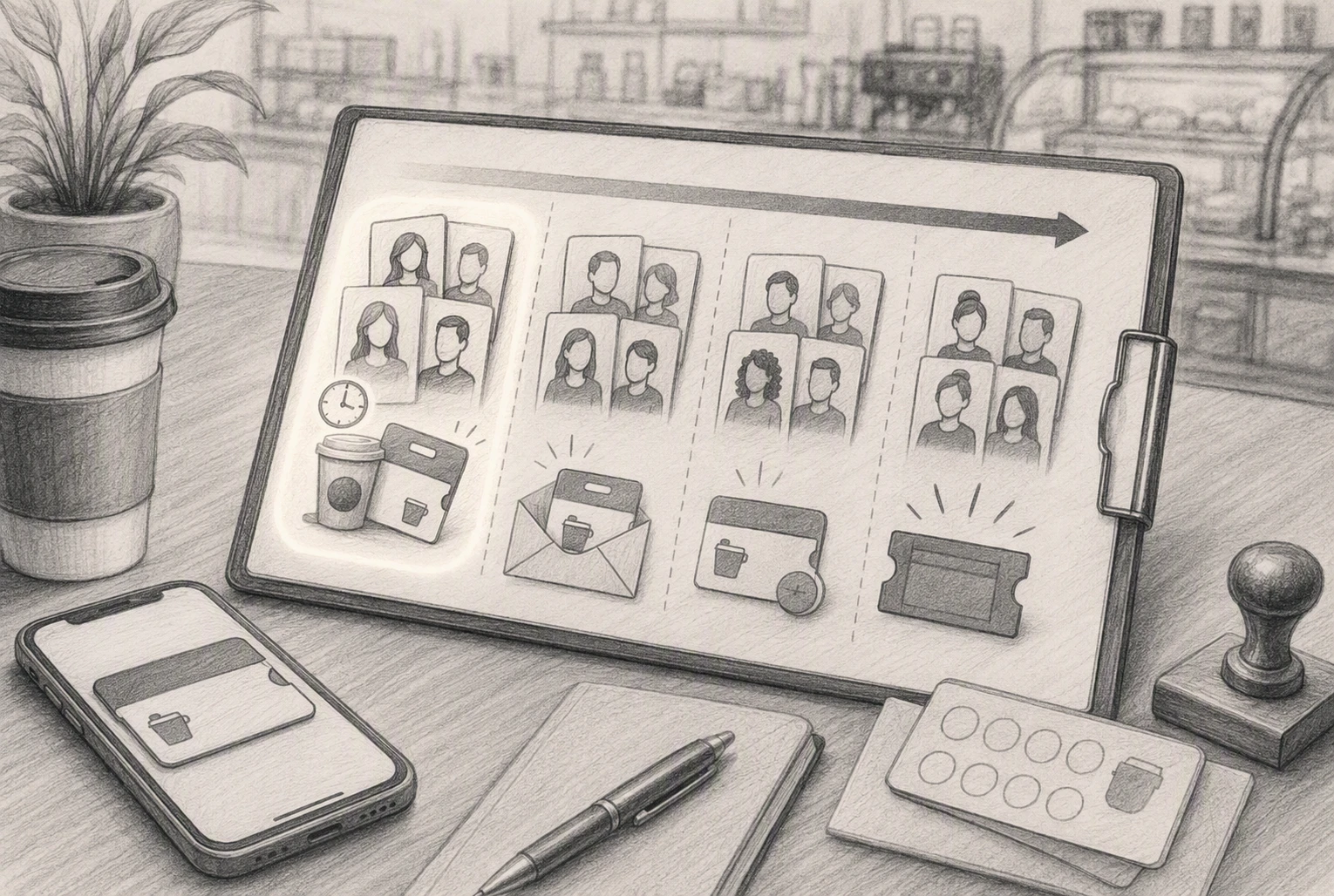
Use recency, frequency, and spend to split lapsed pass holders into groups that need different nudges. That is the core of RFM segmentation, and it works because recent buyers, frequent buyers, and high spenders do not lapse for the same reason.
| Segment | What defines them | Best message angle |
|---|---|---|
| Mildly lapsed | Recently inactive | Restart the routine |
| Near reward | One visit away | Finish what you started |
| High spend | Bigger past basket | Give value, not discounts only |
| Low frequency | Rare but intentional visits | Make the offer selective |
Use progress to pull them back
If someone is close to a reward, lead with that first. RFM groups often reveal people with decent frequency but weak recency. Your message should say:
Progress beats vague “we miss you” copy almost every time.
Match the incentive to past spend
High spenders should not get the same reward as bargain hunters.
Lower frequency, higher selectivity
Some customers buy rarely but still matter. Do not spam them. Send fewer pushes, tied to clear moments:
If they visit by choice, not habit, relevance matters more than volume.
Also Read: OneCup Blog - Loyalty Program Tips & Retention Strategies
Start with signals your pass platform can trigger on, not nice-to-have CRM fields. In simple terms, recency is still the strongest first filter in RFM because recent buyers are more likely to buy again, as Investopedia’s RFM overview notes.
Use this order:
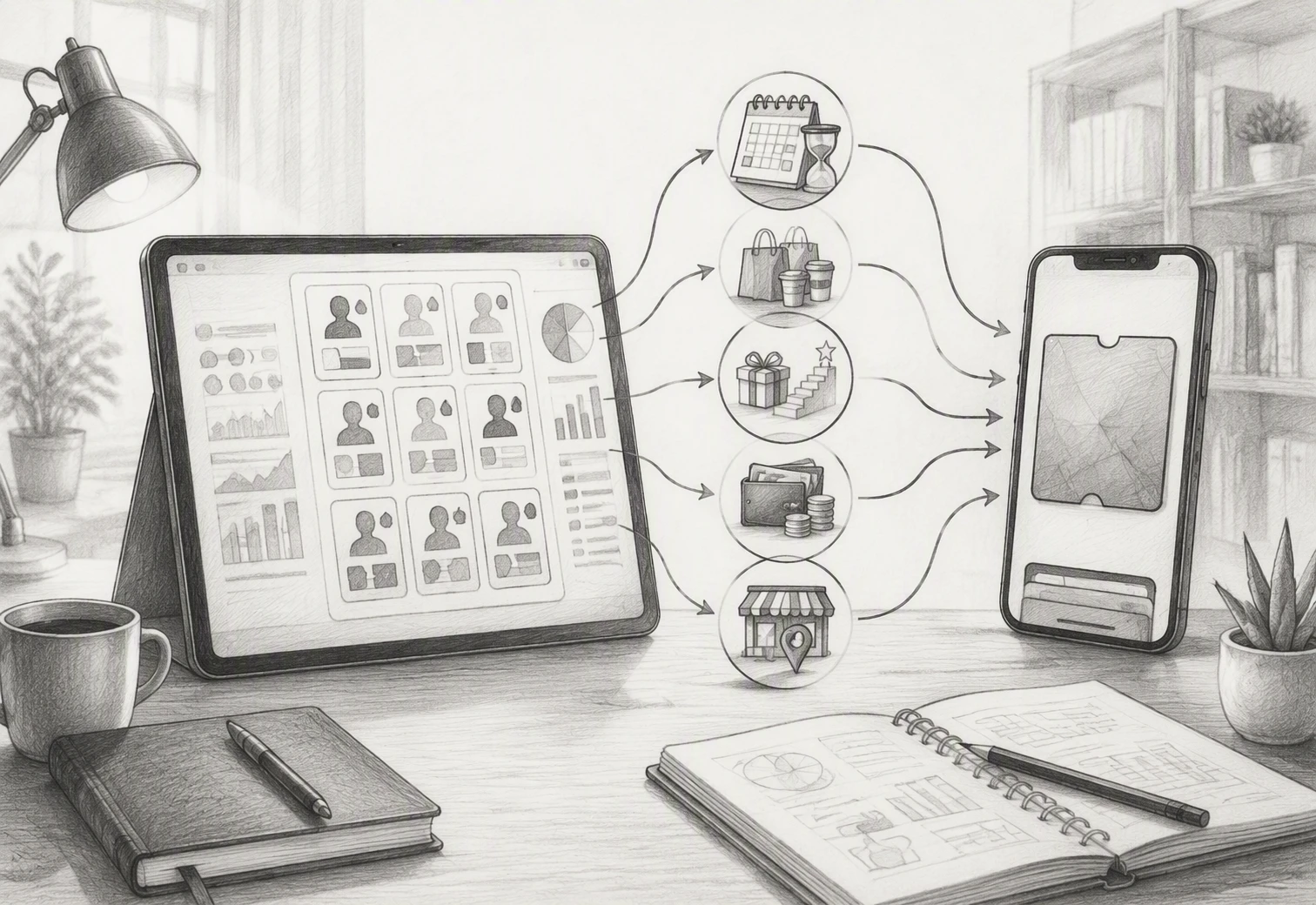
Skip weak signals that wallet passes cannot act on fast:
A 2026 repeat-purchase study found repurchase timing often follows weekly or monthly cycles, which helps you time reminders better when repurchase patterns repeat.
If a signal cannot change the pass message, offer, or send time, do not segment on it.
Also Read: Loyalty Program Cards: The Complete Guide for Businesses
Ready to turn lapsed segments into live pass campaigns? Use OneCup to launch app-free offers fast, target win-back groups, and track engagement across locations.
It lets you match the offer to the lapse stage. Recent lapsers may need a small nudge. Long-gone buyers often need a stronger reason and tighter expiry.
Use last visit date, spend, visit count, reward progress, location, and past redemptions. These signals show who is worth reactivating first and what message should change.
Personalized pass updates feel timely, not generic. A customer close to a reward reacts differently than someone who stopped after one visit. That difference lifts opens, saves, and redemptions.
Segment lapsed pass users by recency, value, and reward proximity first. Then match each group to one clear offer. That matters because EY’s 2026 loyalty study shows customers check rewards less often and lose interest when value feels slow or hard to see.
OneCup LLC
651 N BROAD ST - SUITE 201
MIDDLETOWN DE 19709
United States
Whatsapp : +18023003737

.svg)

.svg)