
Quick Summary: Switching from paper stamp cards to digital loyalty programs helps businesses track customer visits, reduce fraud, and send targeted offers. The best digital systems are simple to join, fast to use, and integrate with wallets or QR codes, avoiding app friction. Proper planning involves auditing existing programs, setting clear goals, training staff, and promoting consistently across locations. Digital loyalty enhances customer engagement and provides valuable data, but success depends on simplicity, clear messaging, and smooth implementation.
A café owner looking at a pile of punch cards by the register and a QR code that opens Digital Loyalty Cards in Apple Wallet or Google Wallet is not just picking a new format. They are choosing how people join, earn, redeem, and come back. That is the real challenge behind any Paper Card Replacement.
Most paper programs break fast. Cards get lost, staff skip punches, and owners cannot track results. A better setup uses Loyalty Program Software, a Customer Loyalty System, and Digital Loyalty Cards that fit daily habits. The right Digital Loyalty Platform or Reward Program App can also work as an App-Free Loyalty System.
This guide breaks down how to compare Loyalty Card Software, pick practical Business Loyalty Solutions, and build a Seamless Reward Program with Digital Loyalty Cards, solid Loyalty Program Software, and a Customer Loyalty System that works across one or many locations.
Paper stamp cards still do a few things well. They are cheap, easy to explain, and staff can start using them today. For a tiny shop, that simplicity matters. But paper breaks fast in real life.
A paper card rewards repeat visits, but it gives you almost no proof that your Customer Loyalty System is working. A University of Hawaiʻi case study found that moving from a card-based setup to digital gave brick-and-mortar shops new analytics and better ways to understand customer behavior through BI tools and web apps case study research.
Digital programs keep the reward simple but add visibility. You can see who joined, who came back, and who stopped visiting. That helps you send better offers, fix weak spots, and measure results.
A digital Customer Loyalty System turns loyalty from a paper habit into a marketing channel.
This matters even more as you grow. Yotpo notes that digital loyalty cards support real-time updates, personalization, and cross-channel use, which paper cannot match digital loyalty guide. For multi-location brands, one shared Customer Loyalty System helps every store follow the same rules while giving head office a clear view of performance.
Pick software that removes steps, not adds them. The best platform feels easier than paper on day one.
Customers should join in seconds. If they must download an app, create a password, and verify email, many will quit.
Look for:
Wikipedia notes that many digital loyalty programs now use QR or barcode access instead of physical cards, which fits small businesses that want less friction and fewer lost signups in store digital loyalty programs.

Your team needs a system they can use during a rush. That means simple earning rules and fast scans.
Check for:
Google says Wallet supports presenting credentials through QR code or NFC tap, which shows why wallet-based loyalty can speed up in-store use QR code or NFC tap.
Good software should do more than count stamps. It should help you see who returns, who drops off, and which reward drives repeat visits.
Use this checklist:
| Area | What to look for | Why it matters |
|---|---|---|
| Analytics | Visit rate, redemption, repeat purchase trends | Shows if the program works |
| Messaging | Email and SMS tools with targeting | Helps bring customers back |
| Customer data | Consent tracking and profile history | Reduces privacy risk |
Keep data collection lean. If you collect more than you need, you create more risk than value.
Start with a simple review of what your paper card actually does today.
List the rules, reward, cost, and weak spots. Check how many stamps a customer needs, how staff validate cards, and where fraud happens. Note what you cannot track now, like repeat visit rate or reward redemption speed. According to the 2025 EY Loyalty Market Study, customers want digital-first convenience, so your audit should focus on friction first.
Keep the reward structure simple at launch. Do not fix your paper card problems by adding new complexity.

Pick 3 to 5 goals, not 15. Good goals tie to behavior and reporting.
Deloitte reports that 72% of consumers say loyalty programs make them more likely to spend with their preferred brand in its 2026 loyalty research. That makes goal-setting more than an ops task. It affects revenue.
Decide how paper users move over. Give them a fair bridge.
Run paper and digital side by side for a short period, then end paper cleanly. This avoids confusion and staff workarounds.
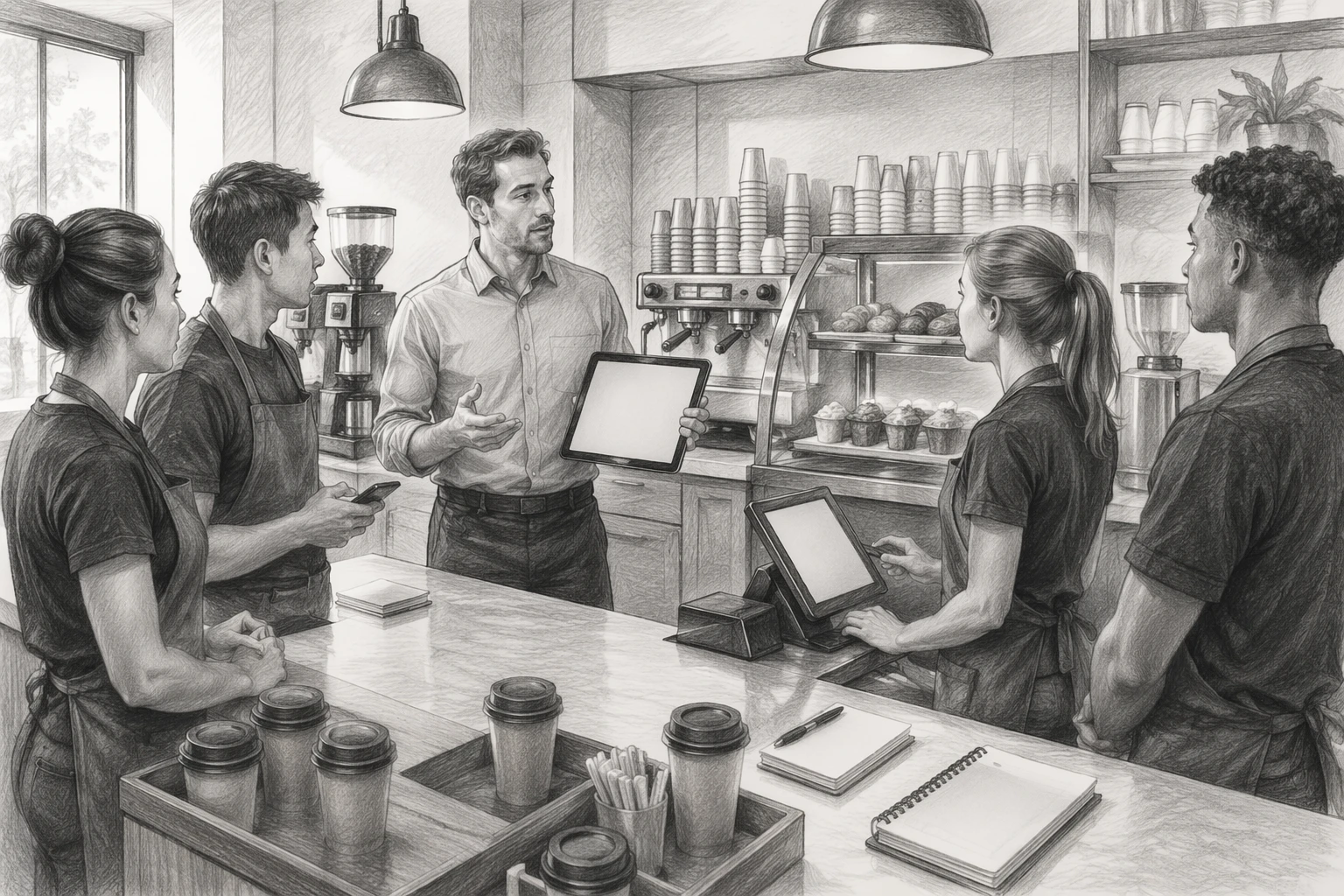
Start with one simple script. Every cashier and floor staff member should know:
Run short practice sessions before launch. Keep them under 15 minutes and use real checkout examples. Walmart says scaled training works best when teams get a common base plus role-specific guidance, not one generic lesson for everyone according to HR Dive.
Keep a one-page cheat sheet at each till for the first 2 weeks.
Multi-location rollout fails when each store makes up its own version. Use one playbook for:
| Rollout item | Standard rule | Owner |
|---|---|---|
| Staff script | Same first invite line | Marketing or ops |
| Reward logic | Same earn and redeem rules | HQ |
| Exception process | Same refund and missed stamp fix | Store manager |
| Launch timing | Same start week and review date | Regional lead |
Dairy Queen's training team has stressed that growth across many sites depends on every location delivering a consistent, high-quality experience in this 2026 report.
Do not rely on staff alone. Put the offer in the places customers already notice:
Use the same core message across stores, but allow local managers to swap photos or examples. If you use OneCup, give each location prebuilt assets so launch stays fast and on-brand.
If customers need three steps to join, adoption will drop fast. Keep the first reward path easy to understand.
Making the program too complicated
Paper cards work because they are easy to grasp. Your digital version should feel the same. If staff need a long script, you built too much. Deloitte notes that effortless redemption helps drive engagement, while many customers forget to redeem when the process feels harder than it should (Deloitte loyalty research).
Keep one earning rule, one reward path, and one clear next step.
Choosing a tool that creates more friction than paper
A bad digital setup slows checkout, needs too many taps, or forces customers to download an app they do not want. That is worse than a paper card. Customers tend to stick with only a few programs, and they want simplicity, speed, and relevance (CX Dive report).
Launching without a clear customer message
Do not assume people will "get it." Tell them:
If your message is fuzzy, sign-ups will stall even if the platform is solid.
Do customers need to download an app? No. Many digital loyalty programs work through SMS, email, QR codes, or wallet passes. That matters because 91% of U.S. adults own a smartphone, so access is broad without forcing an app install.
Is digital loyalty better for small businesses? Usually, yes. You spend less time stamping cards, lose less data, and can track visits and rewards. Still, keep a simple backup for guests with low digital access, since smartphone ownership still varies by age and income.
Can I keep my current reward structure? Yes. Most businesses start by copying the same offer, like buy 9, get 1 free, then improve it later. That keeps staff training easy and avoids confusing regulars.
You cut lost cards, reduce fraud, track visits, and send offers faster. Digital programs also make rewards easier to redeem and give you data to improve repeat visits.
OneCup removes app friction, so more customers join. It helps you deliver fast sign-up, simple rewards, and timely messages that bring people back more often.
Look for easy sign-up, fraud control, reward rules, customer data, campaign tools, and location-level reporting. Simple staff use matters just as much as customer experience.
Start with one clear reward, train staff, migrate slowly, and promote it at checkout. Test redemption flow first, then review sign-up and repeat visit rates weekly.
Paper is cheap but hard to track and easy to lose. Digital adds data, automation, and stronger control, but needs setup, staff training, and customer onboarding.
Yes. The core drivers stay the same in most markets: convenience, reminders, and clear rewards. Local laws, data rules, and customer habits should shape your setup.
You can tailor reward thresholds, branding, messages, and offers by location or customer segment. That helps chains keep control while letting each store stay relevant.
Check privacy laws, consent rules, message permissions, data storage, and reward terms. Make expiration rules and eligibility clear, and confirm local tax treatment if needed.
Replacing paper stamp cards works best when you treat it as both a tech change and a customer habit change. Pick a simple reward model, make sign-up fast, train staff well, and track adoption by location. Digital programs give you cleaner data, easier updates, and better follow-up than paper ever could. Research also shows loyalty works best when rewards feel clear, useful, and easy to redeem, according to this PMC study on loyalty card behavior. That matters even more now, as Deloitte reports that consumers expect real value and simple engagement from loyalty programs.
If you're ready to retire the paper stamp cards, OneCup offers a simple, app-free digital loyalty program built for small businesses making the switch. Get started with OneCup and see how simple digital loyalty can be.
OneCup LLC
651 N BROAD ST - SUITE 201
MIDDLETOWN DE 19709
United States
Whatsapp : +18023003737

.svg)

.svg)
