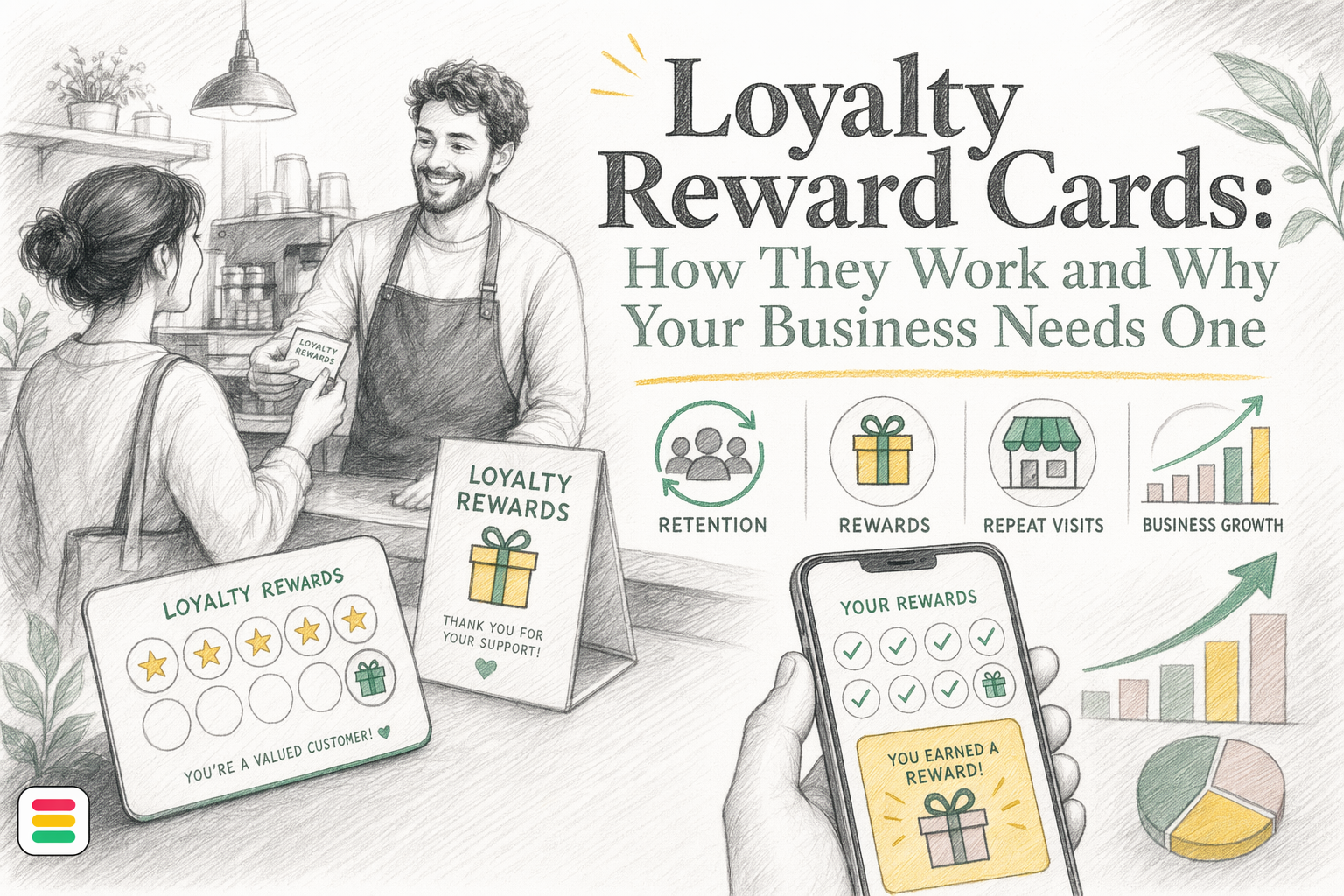
Quick Summary: Loyalty reward cards help businesses encourage repeat visits and increase sales by tracking customer behavior and offering simple rewards. Digital cards are the easiest to update and scale, making them popular among many brands. The key is choosing a model that matches how your customers buy and ensuring the system is easy to join and use. Properly implemented, loyalty programs can boost customer retention and overall growth.
A coffee shop, salon, and retail chain can all grow with the same system: a loyalty reward card. The challenge is not offering rewards. It is choosing a loyalty reward card that fits how customers buy, return, and spend. This guide explains how a loyalty reward card works, which model fits your business, and how to use it to track retention, repeat sales, and growth across one or many locations.
A loyalty reward card tracks repeat visits or spend, then gives customers a perk after they hit a goal. Deloitte says 72% of consumers are more likely to spend with preferred brands when a loyalty program is in place, which shows why this simple system works Deloitte research.
The basic customer journey
Paper, plastic, and digital cards
The best card is the one your staff can explain in 10 seconds and your customers will actually use.
Businesses use loyalty reward cards to give customers a reason to come back sooner. That matters because repeat buyers are easier to win than brand-new ones. Deloitte found 72% of consumers say loyalty programs make them more likely to spend with a preferred brand and 56% say they spend more because of the program, according to Deloitte's 2025 loyalty survey.
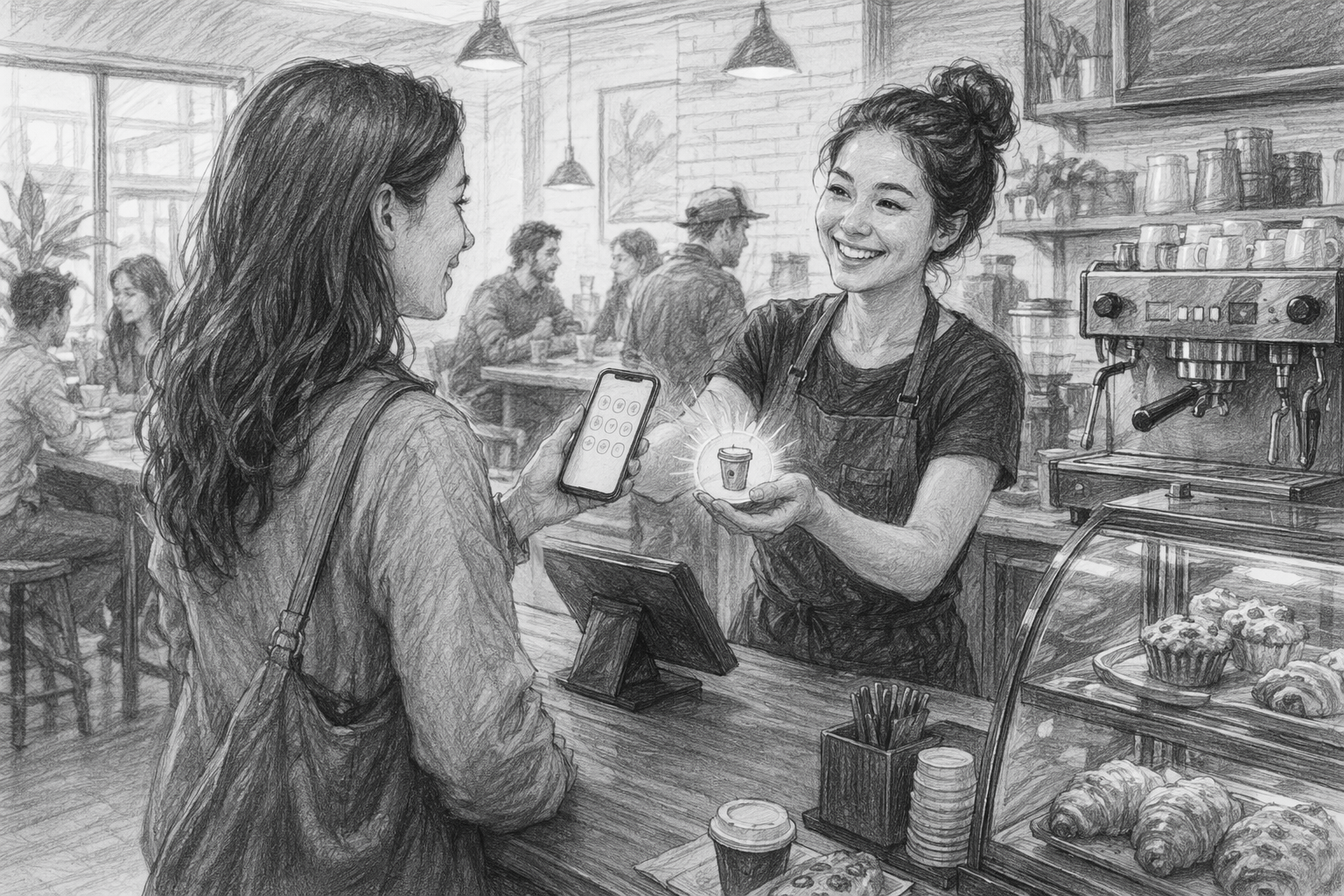
Cards also lift basket size and give you better customer data. You can track visit frequency, favorite items, and reward use, then send sharper offers. EY reports 92% of consumers are enrolled in at least one loyalty program, which shows how normal these programs are now for shoppers, per the 2025 EY Loyalty Market Study.
A good loyalty card is not just a perk. It is a simple system for repeat sales and smarter marketing.
Pick the model that matches how customers buy. That matters more than fancy features. Deloitte found 72% of consumers are more likely to spend with preferred brands when a loyalty program is in place in its 2025 survey summary.
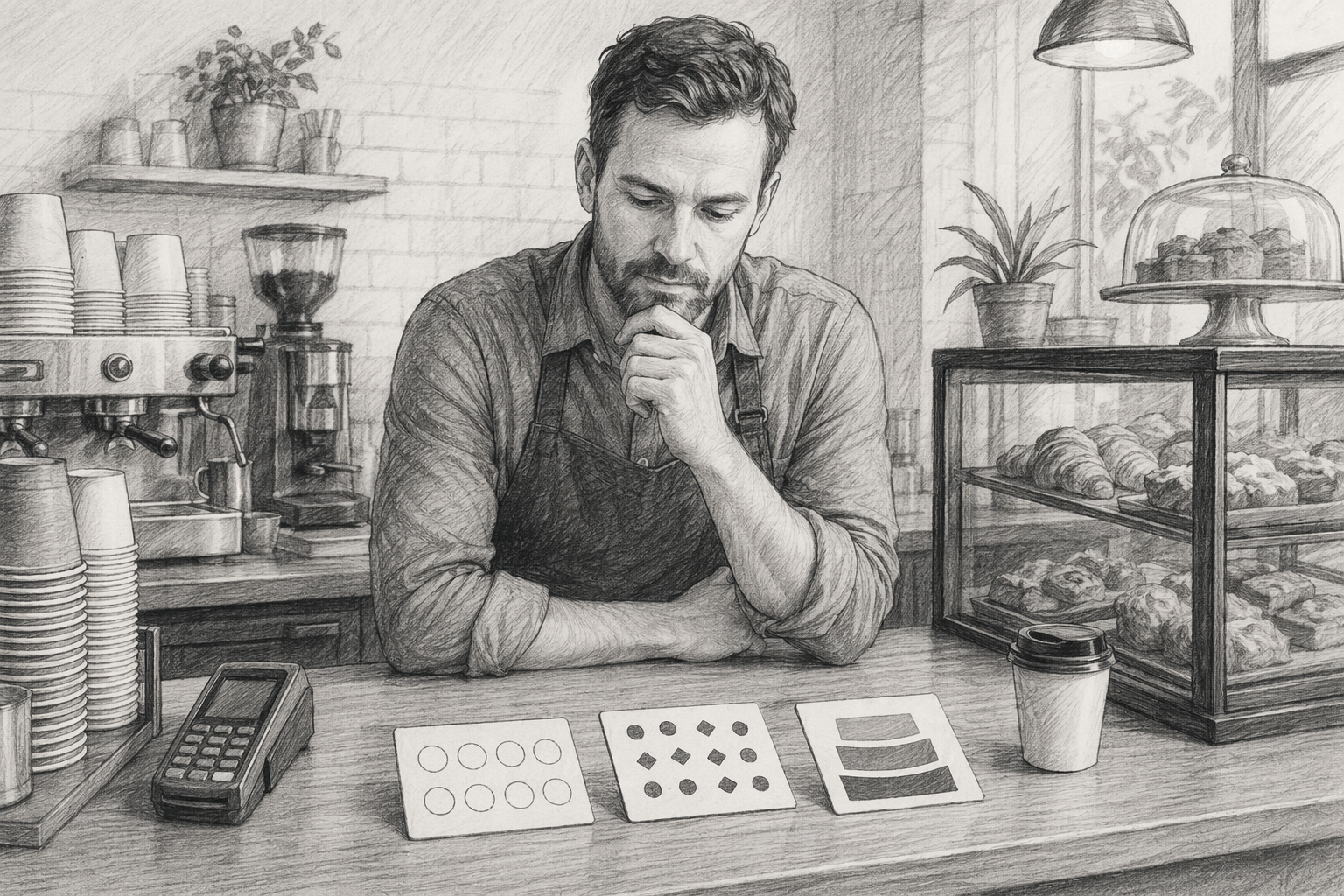
Points cards for variable spend
Use points when basket size changes. This fits retail, restaurants, and services with add-ons or upsells. Points reward bigger orders without changing the core offer. EY found nearly all surveyed consumers were enrolled in at least one loyalty program, so your setup needs to feel simple, not crowded, per the 2025 EY Loyalty Market Study.
Tiered and membership-style cards
Choose this when you want higher spend and stronger habits. Tiers reward progress. Paid or perk-based membership works best for brands with repeat, high-value customers. Use it only if you can give clear ongoing value.
If customers need too much effort to understand the reward, the model is wrong.
Pick a system customers can join in seconds and use without staff help. Fewer steps means more sign-ups and more repeat visits. Rewards should be easy to understand, easy to track, and quick to redeem at checkout.
If customers need an app, a password, and three taps to claim a reward, adoption drops fast.
Your loyalty tool should connect with your POS, CRM, and marketing stack. Good data matters more than flashy features. You need clean reporting on sign-ups, visits, redemptions, and repeat spend. Consent and privacy controls matter too, since loyalty programs collect personal data and messaging permissions, as noted in NIST privacy guidance.
Multi-location brands need one customer profile, shared program rules, and location-level reporting. That keeps offers, balances, and performance consistent across stores. A strong setup should support central control with local flexibility, which mirrors current multi-location loyalty architecture guidance.
Customers earn points, stamps, or rewards after each visit or purchase. Businesses use the data to drive repeat visits, track habits, and send timely offers without needing a separate app.
Digital cards cut print waste, speed up sign-up, and make rewards easier to redeem. You also get better customer data, stronger repeat sales, and simpler updates across one location or many.
Customers have more choices and switch fast. A good loyalty program gives them a reason to come back, spend again, and stay connected to your brand between visits.
OneCup makes rewards simple, mobile-friendly, and app-free. That lowers friction at sign-up and redemption, which helps more customers join, return often, and respond to targeted campaigns.
Look for easy setup, app-free access, custom rewards, customer data, campaign tools, multi-location support, and clear reporting. If staff cannot use it fast, adoption will drop.
They increase repeat purchases, raise average order value, and encourage referrals. Digital passes also keep your brand visible on customers' phones, which helps drive return visits in different markets.
Yes, if the platform supports local customer habits, simple onboarding, and flexible reward rules. App-free systems often travel well because they reduce barriers tied to downloads and device limits.
Top trends include app-free cards, personalized offers, birthday rewards, location-based campaigns, automated win-back messages, and stronger analytics. Businesses now treat loyalty as a retention system, not just a discount tool.
Loyalty reward cards work best when you treat them as a retention system, not a perk. Pick a model that fits how your customers buy, keep rewards simple, and make redemption easy. That matters because Deloitte found loyalty programs can raise future purchase intent, and SME research shows returning customers drive more purchase frequency than new ones.
OneCup LLC
651 N BROAD ST - SUITE 201
MIDDLETOWN DE 19709
United States
Whatsapp : +18023003737

.svg)

.svg)