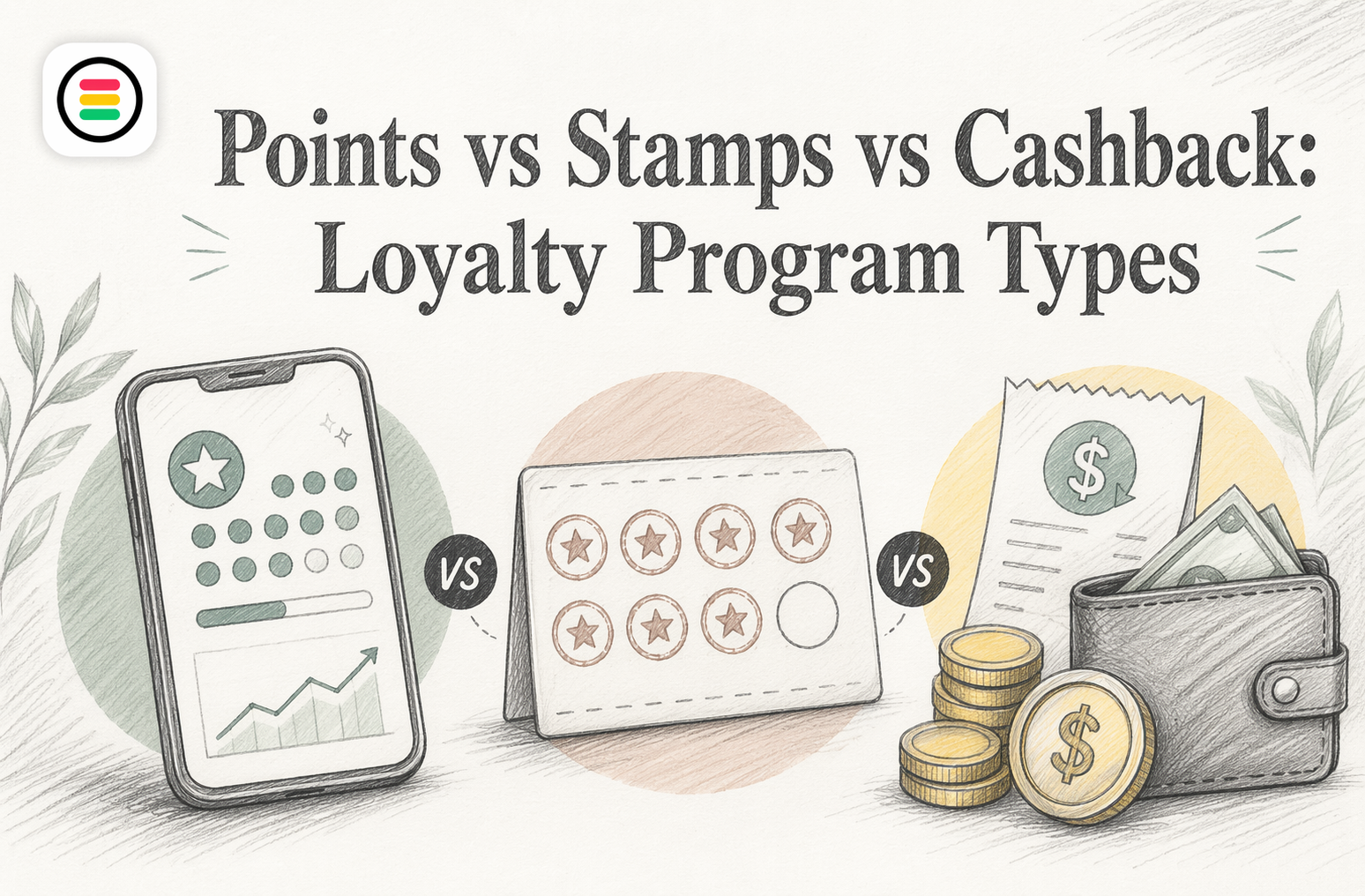
Quick Summary: For small businesses like cafes and salons, stamps are the simplest way to encourage repeat visits, while points offer more flexibility for varied spending. Cashback appeals to price-sensitive customers but can cut into margins if overused. Choose the program type that best matches how your customers buy and consider hybrid options for different goals.
Most local brands need a clear answer fast. For cafes, salons, and shops, Stamps Loyalty Cards often drive easy repeat visits, Points Loyalty Rewards add flexibility, and cashback appeals to value-focused buyers. This guide compares Loyalty Program Types for margins, behavior, and ops. We help small and multi-location teams choose the right Loyalty Program Types with practical, field-tested advice on Loyalty Program Types that fit real business models.
| Points loyalty program | Stamps loyalty program | Cashback loyalty program | Tiered loyalty program | Referral loyalty program | |
|---|---|---|---|---|---|
| How it works | Customers earn points for spending or actions and redeem them later | Customers collect stamps until they unlock a reward | Customers receive money back or store credit after spending | Customers move up levels to unlock better perks | Customers earn rewards for successful referrals |
| Best for | Brands that want flexible, long-term retention | Frequent repeat-visit businesses | Price-sensitive buyers | High-value repeat customers | Acquisition-focused brands |
| Customer appeal | Clear progress toward rewards | Instant, simple, familiar | Immediate tangible savings | Status and exclusivity | Sharing and earning |
| Setup complexity | Medium | Low | Medium | Medium to high | Low to medium |
| Reward flexibility | High | Medium | Medium | High | High |
| Typical business fit | Retail, ecommerce, omnichannel brands | Cafes, restaurants, salons, car washes | Retail, recurring spend, high-competition categories | Premium brands, franchises, multi-location operators | Growth brands, local businesses, ecommerce |
Points programs let customers earn rewards over time, so they fit brands that want flexible retention across many products and locations.
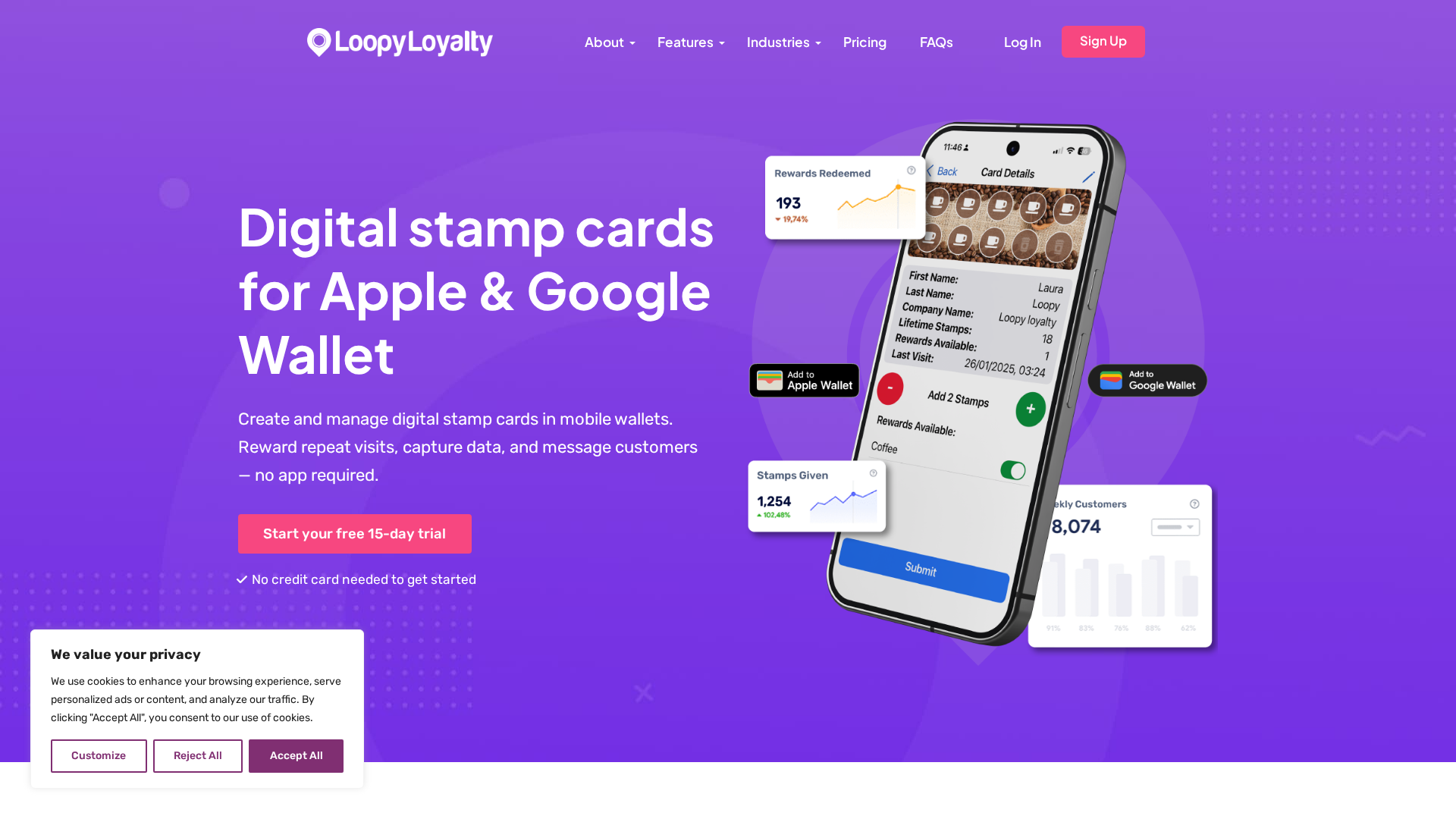
Stamp programs keep loyalty simple. They work best for high-frequency businesses like cafes, salons, and car washes where customers visit often.
Cashback gives shoppers money back or store credit after spending. It suits price-sensitive markets where fast, clear savings drive repeat purchases.
Tiered programs add status. They fit premium brands and multi-location operators that want to reward top customers with better perks over time.
Referral programs reward customers for bringing in new buyers. They suit growth-focused brands that want loyalty and acquisition to work together.
If you need fast repeat visits, use stamps or simple points. If you need higher spend, lower churn, and word-of-mouth, add tiers or referrals later.
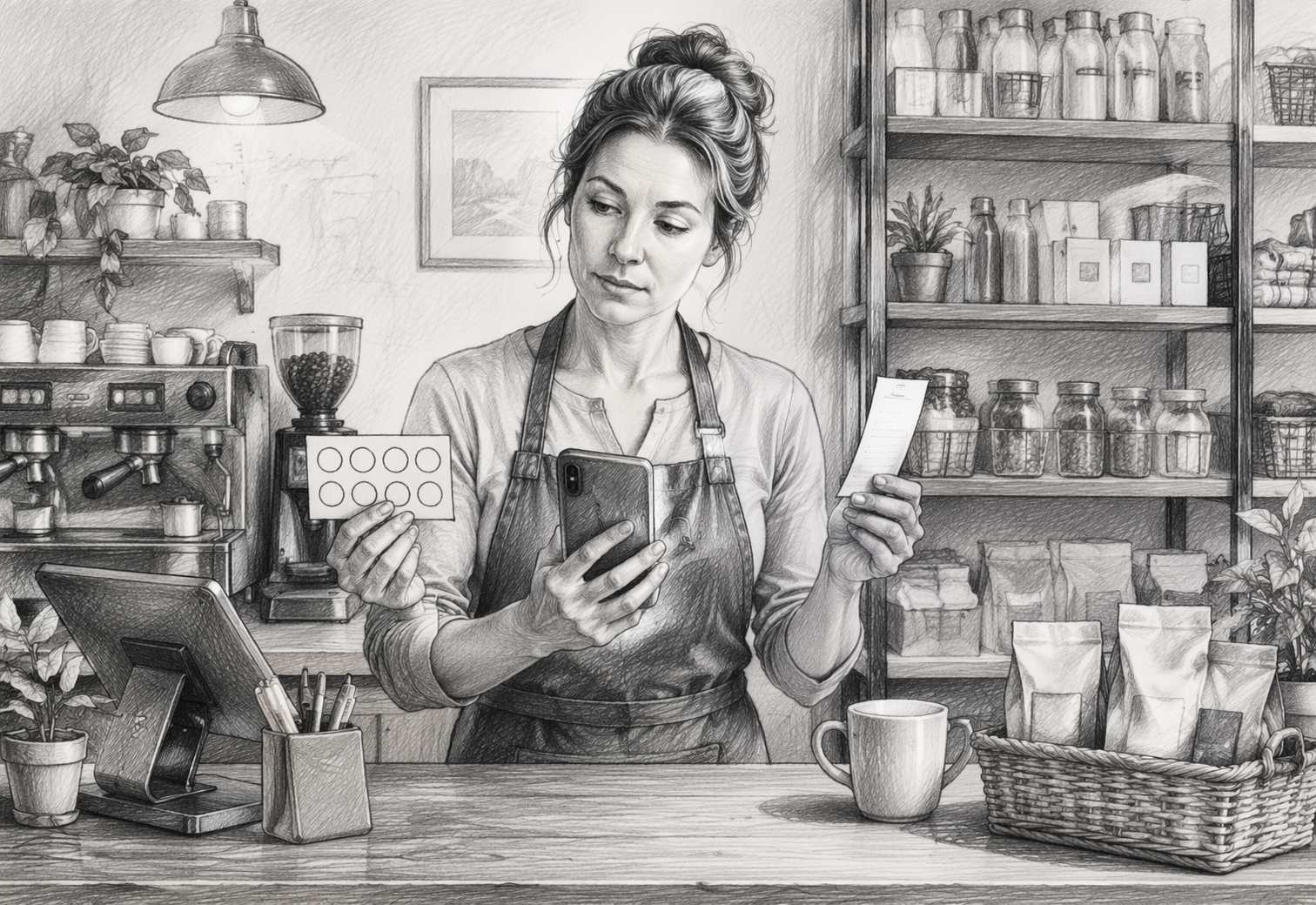
Research shows referral programs can lift loyalty, with referrer defection dropping from 19% to 7% in one field test Journal of Marketing research.
Start simple first. Add tiers or referrals only after your base reward gets steady use.
Also Read: Loyalty Program Cards: The Complete Guide for Businesses
Points feel flexible, but they can also feel fuzzy. Research shows people treat points differently from cash, and variable point values reduce redemption because value feels harder to judge Journal of Marketing Research. Stamps win on speed and visibility. Customers see progress fast. Cashback feels concrete because the reward is money, so perceived value is easy to understand.
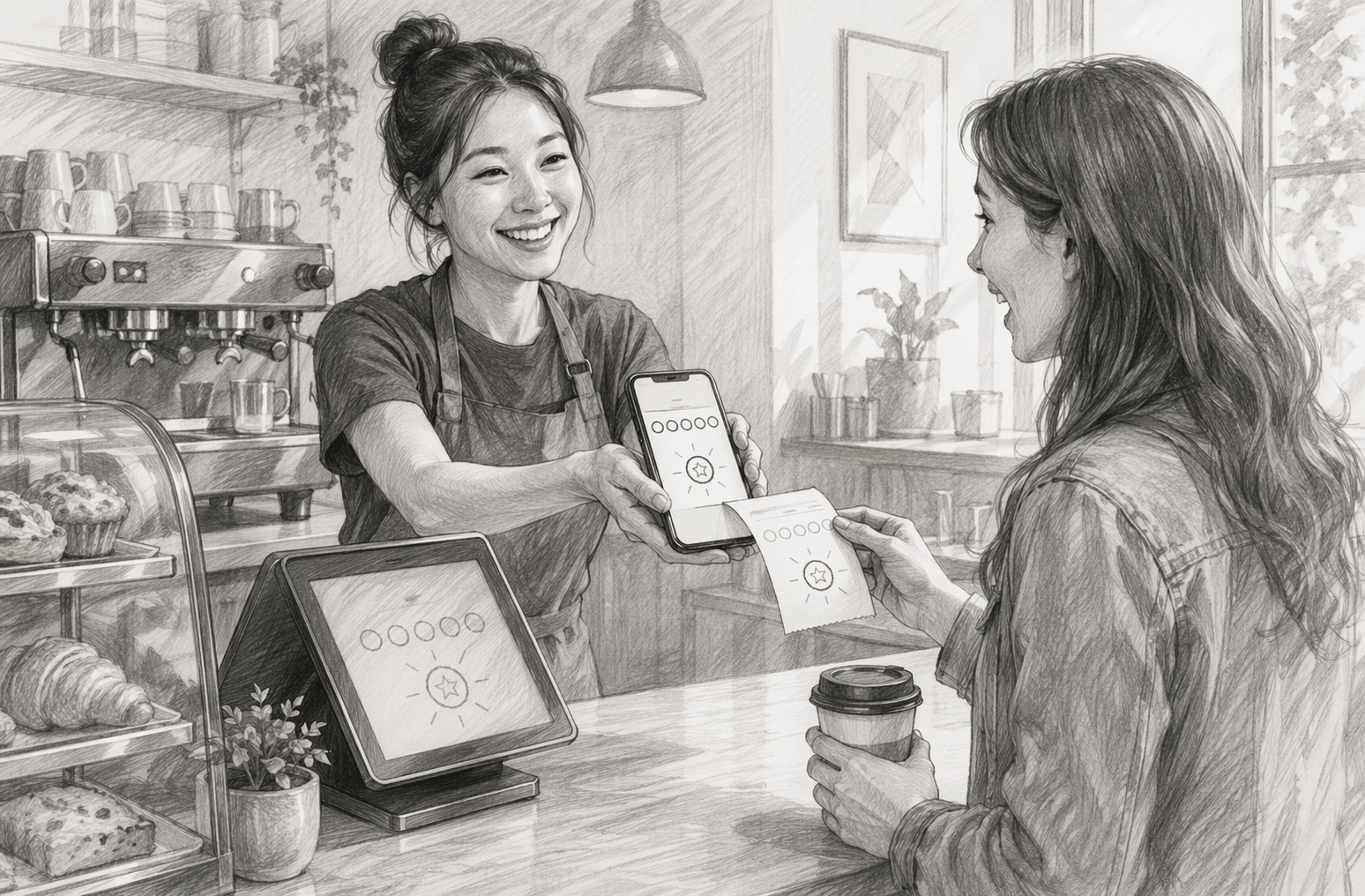
Status, sharing, and habit formation also change by format. Loyalty research groups these effects into status, habit, and relationship drivers loyalty program theory review. Points support tiers and status best. Stamps build simple routines. Cashback drives return visits when balances wait to be used.
Also Read: Loyalty Reward Cards: How They Work and Why Your Business Needs One
Front-line teams need a program they can explain in one sentence and apply in seconds. If staff must check balances, fix errors, or teach an app, adoption drops fast. Deloitte notes that effortless redemption is a key driver of engagement in loyalty programs Deloitte Insights.
Keep the rule simple: buy, earn, redeem.
Complexity starts with POS sync, reward rules, tax handling, and multi-location reporting. Points systems usually need more setup than stamps or cashback. That matters more once you have several stores or mixed channels. Deloitte also highlights fresh VAT questions around loyalty points in Europe Deloitte Belgium.
Also Read: Wallet Passes vs. Standalone Loyalty Apps: Which Is Better?
Choose based on how people buy. Cafes, salons, and car washes usually win with stamps because visits are frequent and simple. Boutiques and larger tickets fit points better. Price-led retail and fuel often suit cashback, especially while shoppers stay value focused, a shift noted by Deloitte.
Use a hybrid when one reward type cannot cover both frequency and spend. A cafe can use stamps for free drinks and points for higher-margin extras. This also helps avoid unused rewards, since Antavo reports many customers leave points unspent.
Ready to pick the right loyalty model fast? Try OneCup to launch app-free points, stamps, or cashback rewards that fit your business and scale across locations.
Points fit flexible rewards, stamps fit simple repeat visits, and cashback fits spend-based value. Points need more setup. Stamps are easiest to explain. Cashback feels clear but can cut margin faster if rewards are too rich.
Stamps usually work best for small cafes and restaurants. They are easy for staff, easy for guests, and strong for repeat visits. Points make sense if you sell varied items, add tiers, or run multiple locations.
Digital cards are easier to track, update, and scale across stores. Physical cards feel familiar but get lost and give weak data. For most cafes, app-free digital options like OneCup keep setup simple without adding staff friction.
Pick stamps for simple repeat visits, points for flexible spend rewards, and cashback for clear value. Loyalty programs work best when the model fits customer behavior, not trends, as Wikipedia explains.
OneCup LLC
651 N BROAD ST - SUITE 201
MIDDLETOWN DE 19709
United States
Whatsapp : +18023003737

.svg)

.svg)