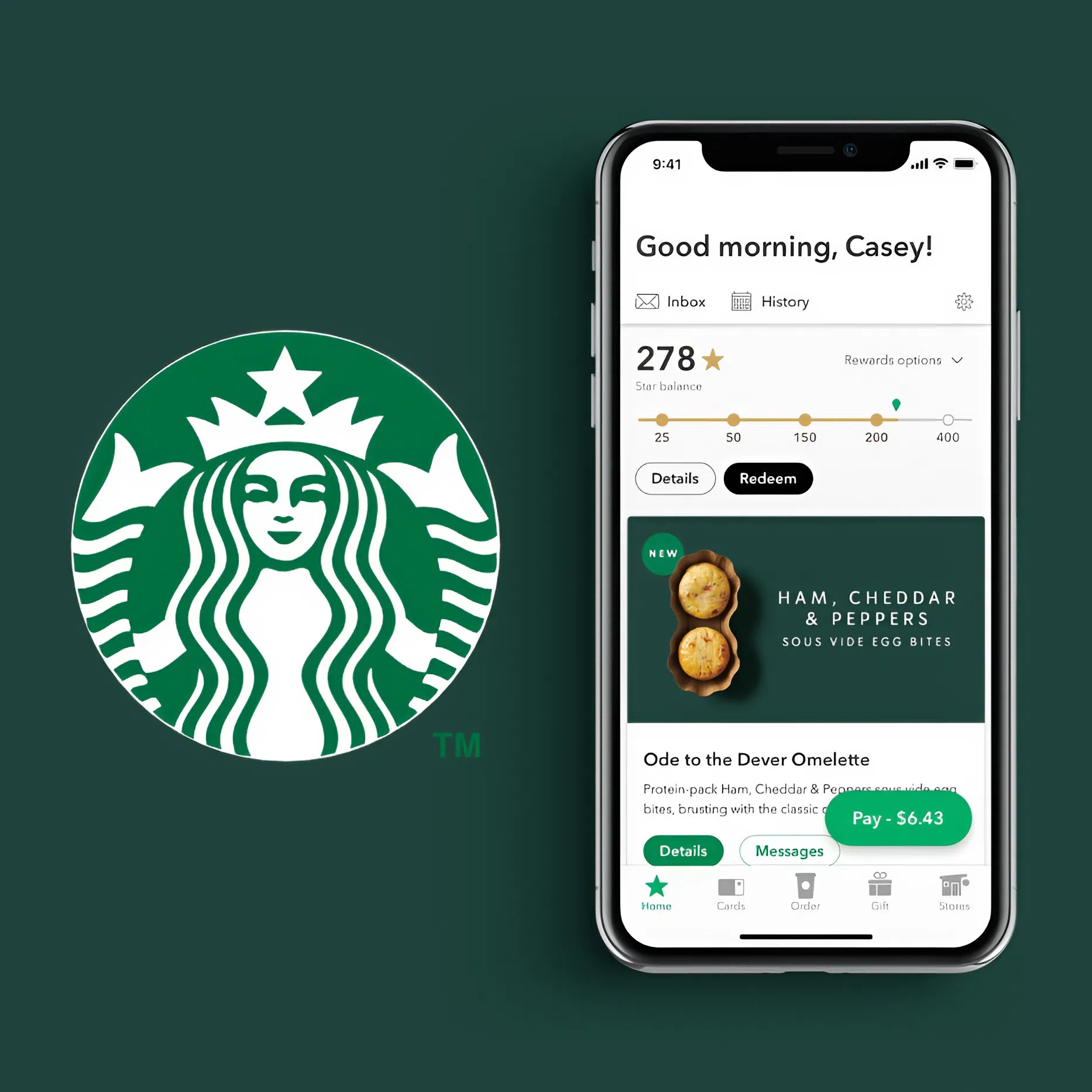
Starbucks spends millions on app development and maintenance. But the core principles that make their loyalty program successful don’t require deep pockets. They require understanding what actually drives customer behavior.
Customers should understand your reward system instantly. If they need a calculator to figure out what their points are worth, you’ve already lost them.
The most successful small business loyalty programs often use straightforward ratios, like:
While Starbucks can afford to have customers save up hundreds of stars for a bigger reward, small businesses often see better results with achievable, frequent wins. Your customers should feel like they’re making progress every single visit.
This is where small businesses can actually outperform Starbucks. You know your regulars by name, their usual orders, and their preferences. A digital loyalty card platform like OneCup Cards lets you leverage this knowledge by:
These personal touches create emotional bonds that go beyond a transactional relationship.
Every day without a loyalty program, small businesses bleed potential revenue. Industry research often cited in the retention world suggests that increasing customer retention by just 5% can boost profits by 25%–95%.
Yet most small businesses still spend the majority of their marketing budget trying to attract new customers—while ignoring the goldmine sitting in their existing customer base.
Consider what happens when a customer chooses between your coffee shop and the one next door:
The absence of a loyalty program also means missing crucial customer data. Digital platforms can track visit frequency, average spend, and buying patterns. That information transforms from numbers into actionable insight, like:
Creating a loyalty program that rivals what major chains offer is now surprisingly accessible. Platforms like OneCup Cards have democratized the technology, making enterprise-level features available to businesses of any size.
The key is choosing a system that grows with your business rather than constraining it.
A loyalty program isn’t one-size-fits-all. For example:
Your reward structure should align with your business goals while staying attractive to customers.
If your average transaction is $15, don’t make customers spend $500 to earn a meaningful reward. A common sweet spot is 8–12 visits for a significant reward—close enough to feel achievable, but far enough to meaningfully increase customer lifetime value.
Launch day is crucial.
To give your program momentum:
Most importantly, integrate the program into everyday operations so it becomes a natural part of the customer experience—not an afterthought.
You now understand the why and the how behind a winning small business loyalty program. The gap between knowing and doing is where most businesses fail to capture this value.
A simple next step: audit your current retention strategy. For one week, ask every customer:
“Do you have our digital rewards card?”
Ready to build a program that turns casual visitors into loyal advocates? The tools are more accessible than ever. The strategic advantage goes to the business owner who acts first in their neighborhood.
Start today: choose one platform to explore, define your first simple reward, and make the shift from hoping for repeat business to systematically earning it.
Your future loyal customers are waiting.
OneCup LLC
651 N BROAD ST - SUITE 201
MIDDLETOWN DE 19709
United States
Whatsapp : +18023003737

.svg)

.svg)