The Business Owner’s 2026 Guide to Loyalty Cards Customers Actually Use
If you’re running a café, salon, restaurant, boutique, gym, or any local service business, you already know the truth: getting a customer once is hard. Getting them to come back is where the profit lives.
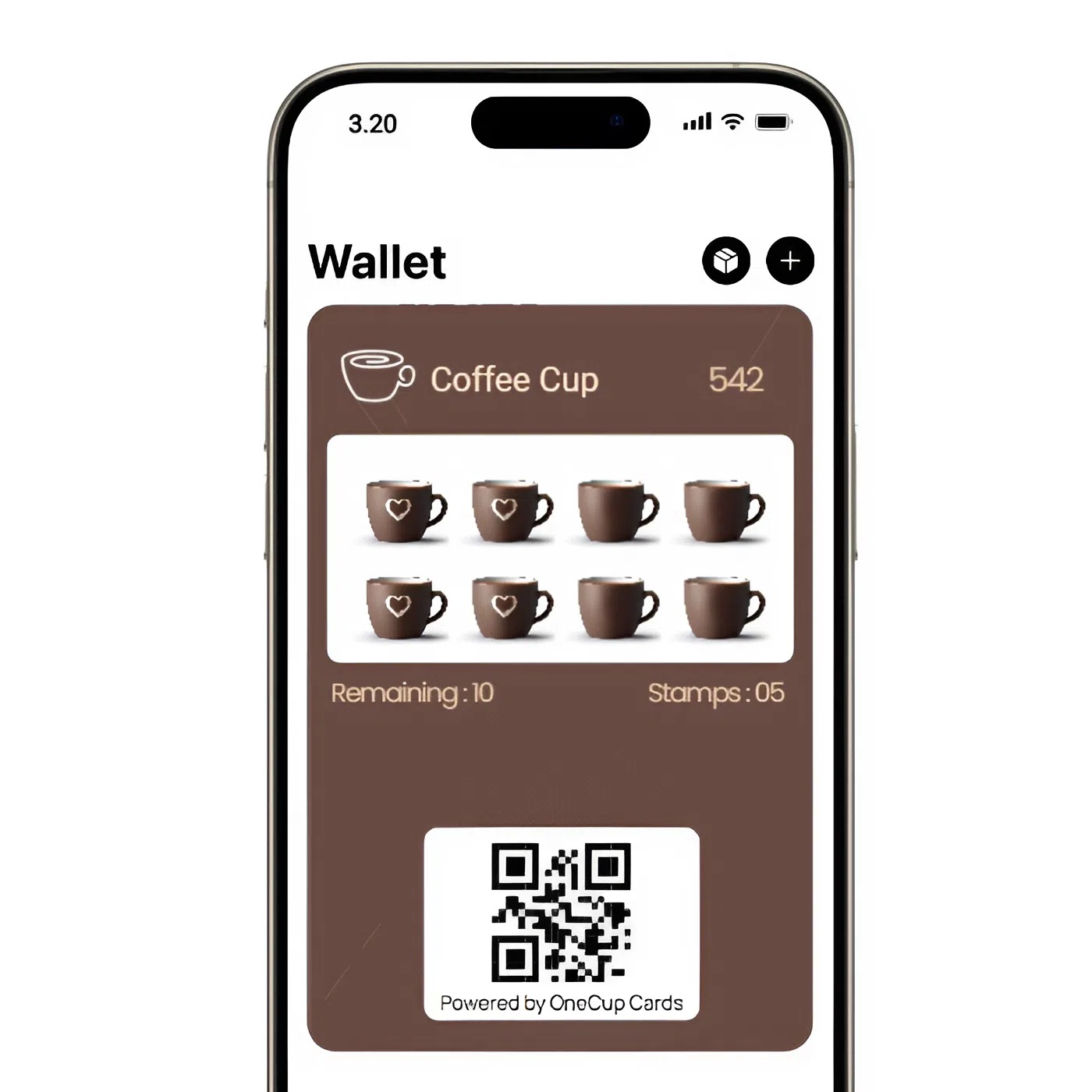
A modern loyalty program should be simple for customers, easy for staff, and sustainable for your margins. The sweet spot in 2026 is a wallet-based loyalty card: customers scan a QR code once, save the card to their phone wallet, and bring it back every visit.
If you want a fast way to launch digital loyalty cards that customers add to their phone wallet by scanning a QR code, you can start here: OneCup.
Why loyalty cards still matter in 2026
- Retention beats acquisition. Even a small lift in repeat customers can have an outsized impact on profit (Bain & Company famously cites that a 5% increase in retention can significantly increase profits, depending on the business model).
- Customers expect rewards. People like being recognized—and they’ll choose the place that makes them feel like a “regular.”
- Spending lift is real. A well-run small business loyalty program often increases visit frequency and average spend because customers have a reason to return (and a reason to add “just one more thing” to reach the reward).
Physical vs. wallet-based digital vs. hybrid (what works best now)
Physical (paper/plastic punch cards)
Great as a visual reminder—until it gets lost, soaked, or lives permanently in a junk drawer.
Wallet-based digital (QR code → save to phone wallet)
Fast signup, always with the customer, and easy to pull up at checkout—without asking anyone to download anything new. This is what most customers actually stick with.
Hybrid (printed card + QR that saves to wallet)
You can still have a small printed card, counter card, or receipt QR—while the real “card” lives in the customer’s wallet for day-to-day use.
If your customers bring their phones everywhere (they do), wallet-based QR loyalty cards are the cleanest upgrade you can make.
The simplest customer experience (the one that gets used)
The best loyalty card is the one customers can use in under 5 seconds.
- Customer scans a QR code
- Your loyalty card saves to their phone wallet
- They show it on every visit
- They earn rewards and redeem when ready
That’s the entire loop. No long forms. No “reset your password.” No friction.
To launch this style quickly, start with a ready-to-go QR code loyalty card and keep the offer incredibly clear (more on that below).
Loyalty card design that increases repeat visits
Whether you’re building custom loyalty cards for a café or a full restaurant loyalty program, design matters—because clarity drives usage.
- Make one clear promise
Examples: “Buy 8, get 1 free” or “Earn 5% back each visit.”
One offer beats five confusing ones. - Answer three questions instantly
- What do I earn?
- How do I earn it?
- How do I redeem it?
- Match your brand
Use your primary colors, a readable font, and one short line that fits your vibe (“Fast coffee. Friendly rewards.”).
- Make it scannable and staff-proof
Your QR should be easy to find and easy to scan. Avoid placing it where it gets covered, creased, or smudged (if you print any signage).
- Keep terms short and fair
If you have an expiration or exclusions, write them plainly. Trust converts better than tricks.
If you want a fast starting point, build a clean loyalty card design first, then refine it after you’ve watched real customers use it.
Reward structures that actually work (with examples)
1) Punch / stamp style (buy X, get 1)
Best for high-frequency, low-ticket businesses:
- cafés, smoothies, boba
- quick-serve restaurants
- car washes
This is the classic digital punch card—and it still wins because it’s simple.
Tip: Keep X between 6 and 10 so the reward feels reachable.
2) Cashback style (earn % back)
Best when ticket sizes vary:
- boutiques
- barbershops and salons
- service businesses
A simple “Earn 3–7% back” style program is easy to explain and scales with spend—great for a retail loyalty program or salon loyalty program.
3) Visit streaks
Example: “Visit 3 times this month, get a bonus.”
This smooths out slow periods and turns “sometimes customers” into regulars.
4) Tiered perks (lightweight VIP)
Example:
- Standard: basic earn rate
- VIP: faster rewards + small perks (priority booking, free add-on, surprise gift)
Tiers work especially well for salons, boutiques, and gyms because customers like status when it’s earned (not spammed).
5) Birthday / anniversary rewards
Small gift, big goodwill. Keep it simple and easy to redeem.
6) Referrals (customer brings customer)
Example: “Give $5, get $5.”
It turns loyal customers into marketers—without feeling pushy.
Keep the math sustainable (a quick model you can trust)
You don’t need complicated spreadsheets. You need a sane “giveback” that your margins can handle.
Example (punch-style):
- Average item: $6
- Gross margin: 60% (so margin dollars ≈ $3.60 per item)
- Offer: free $6 item after 8 purchases
- Your true cost of the reward is your margin cost: $6 × 40% = $2.40
- Spread over 8 visits: $2.40 / 8 = $0.30 per visit
If the loyalty card increases even a small number of extra visits, it usually pays for itself.
This is the core of loyalty program ROI: frequency and consistency beat “huge discounts.”
Personalization that feels helpful (not creepy)
Good personalization is behavior-based, not overly personal.
- Segment by behavior: new, occasional, regular
- Lifecycle nudges: welcome, “we miss you,” “you’re close to a reward”
- Let customers choose preferences (optional): coffee type, favorite services, etc.
These are simple customer retention strategies that feel like good service—not surveillance.
Data, privacy, and trust (do this right)
A loyalty program works best when customers feel safe joining.
- Collect only what you need (often: name/nickname + one contact method)
- Be clear about messaging and make opting out easy
- Follow local privacy rules that apply to you (especially if you serve EU/UK customers)
Trust increases sign-ups. Confusion kills them.
A fast, practical launch plan (you can do this in a week)
- Choose one core offer (don’t launch with multiple programs)
- Create your wallet-based card and generate your QR code
(Example: start with custom loyalty cards built for phone wallets.) - Set simple rules (how to earn, how to redeem, any expiration)
- Train staff with one script
“Scan this once to save your rewards card to your wallet—then pull it up each visit.” - Place the QR where people decide
Counter sign, checkout area, table tent, receipt footer - Run a 2-week launch perk
Example: double stamps, welcome bonus, or “join today = instant progress” - Track a few basics weekly (see KPIs below)
Mistakes that quietly sabotage loyalty programs
- Too many options (choice overload lowers sign-ups)
- Fine-print traps (trust drops, reviews suffer)
- Staff never mentions it (your program becomes invisible)
- Over-discounting (you train customers to wait for deals)
- Making redemption awkward (if it’s embarrassing or confusing, people won’t redeem)
KPIs that matter (simple benchmarks)
- Enrollment rate: aim for 20–40% early in high-frequency businesses
- Active rate (used recently): 45–60% for food/bev is strong; lower-frequency businesses will be lower
- Redemption rate: 20–40% is common
- too low = reward not exciting or too hard
- too high = reward might be too generous
- Visit frequency lift: even +1–2 extra visits per member per year is meaningful
- Average ticket lift: watch for +5–15% when rewards encourage add-ons
Real-world playbooks you can copy
Neighborhood café
- Offer: 8 stamps → free drink
- Tactic: “Midweek bonus stamps” to fill slow days
- Format: wallet-based digital punch card via QR at the counter
Salon / barber
- Offer: 5% back toward future services
- Tactic: birthday month bonus add-on
- Format: quick scan at checkout with a salon loyalty program customers actually remember to use
Boutique / retail
- Offer: tiered rewards after annual spend threshold
- Tactic: VIP early access event
- Format: clean retail loyalty program that feels premium, not coupon-y
(Results vary by business, but these structures are consistently effective.)
2026 trends worth preparing for
- Wallet-based loyalty becomes the default because it’s faster than “logins” and easier than carrying extra cards
- Instant issuance at checkout (scan once, you’re in) becomes the expectation
- Sustainability messaging matters: digital-first + minimal printing wins goodwill
Quick-start checklist (copy for your team)
- Core offer is simple and sustainable
- QR code is placed at checkout and on receipts
- Staff script is written and practiced
- Terms are short and clear
- Weekly review: enrollments, active rate, redemptions, visit lift
- Monthly tune-up: reward, wording, placement, staff reminders
FAQ
- What’s the best format for 2026?
- Wallet-based digital is the easiest for customers to keep and use. A printed QR at the counter is optional, but the loyalty card living in the phone wallet is what drives repeat visits.
- How strong should my reward be?
- For many businesses, an effective 3–7% giveback is sustainable. Punch-style rewards often land in that range depending on your numbers.
- Should rewards expire?
- If you add expiration, make it clear and fair (12 months is common). Clarity prevents frustration.
- How do I reduce fraud?
- Use unique customer passes and consistent redemption rules. Make earning and redeeming simple and trackable.
- How soon should customers feel value?
- Ideally within 1–2 visits (a welcome bonus or quick progress helps build the habit).
Wrap-up
A loyalty card program that works in 2026 is:
- easy to understand
- fast to use at checkout
- fair for your margins
- built around repeat visits, not big discounts
If you want customers to join in seconds and keep your card in their phone wallet, start with OneCup digital loyalty cards and launch with one simple offer.
Ready to build yours? Start here: https://www.onecup.cc


.svg)

.svg)